



Learning Center

ComparePower 57500 5-Star Ratings Reviews

Any product or company names, marks, or logos shown on this page are the property of their respective owners. Compare Power is an unaffiliated, independent marketplace. Get unbiased, accurate information backed by our commitment to editorial integrity.

Slash Your Energy Costs and Save Money with These Simple, Effective Tips

Hey there, are you feeling the pinch of high electricity bills?

Trust me, you’re not alone. Many of us struggle with energy-hungry appliances and habits, costing hundreds of dollars in wasted energy each year.

It’s frustrating.

But here’s the good news: by identifying and tackling these “energy vampires,” you can take control of your electricity consumption and keep more of your hard-earned money in your pocket.

Let’s dive in and explore some simple, effective strategies to help you save.

Unmasking the Phantom Loads: Finding the Energy Suckers in Your Home

First things first, let’s figure out which appliances are secretly sucking up power, even when you think they’re turned off.

We call these culprits “phantom loads” or “standby power.”

I’m talking about your TV, cable box, gaming console, and computer equipment.

Even when you hit the off button, they can still draw small amounts of power, which adds up over time.

For your newer electronics, look at the settings and see if you can disable standby mode.

Many modern devices have energy-saving features or eco-modes that can help reduce their power consumption when inactive.

Check your device’s settings or peek at the user manual to learn how to turn these features on.

Another helpful tip?

Take a look at all the appliances you have and think about whether you need them.

Do you have an extra fridge in the garage that you barely use? Or an old TV gathering dust in the guest room?

Consider donating or disposing of them. Fewer appliances mean less energy consumption, meaning more money in your pocket.

So, what’s the quick solution? Start by unplugging these devices when you’re not using them.

Initially, it might seem like a hassle, but it can make a big difference in your energy bills over a year. Use power strips constantly if you don’t want to plug and unplug.

You can connect multiple devices to one strip and flip the switch to cut the power to all simultaneously. And there’s an even smarter way that I’ll hit on in a bit.

If you want to save money, consider getting an electricity usage monitor.

These nifty little devices help you pinpoint exactly which appliances use the most energy so you can make smart choices about your energy habits.

You might be surprised to learn that the average household has about 40 devices constantly drawing power, and these vampire devices can account for 5-10% of your total energy use.

That means you could be paying a bill because of extra things plugged in.

Smart Power Strips and Energy-Efficient Appliances: Your Secret Weapons

Now, let’s talk about smart power strips and energy-efficient devices. Smart power strips are a game-changer when it comes to fighting energy vampires.

They can automatically cut power to your devices when they’re not in use by using timers or remote triggers.

Some even come with mobile apps to control your devices from your phone. How cool is that?

Now, when it’s time to replace your old appliances, keep an eye out for the ENERGY STAR label. These certified appliances are the real deal when it comes to energy efficiency.

They often use 10-50% less energy than their non-certified counterparts, which can add to some serious savings on your electricity bill over time.

Let’s break it down:

  • If you’ve got an old fridge, an ENERGY STAR-certified refrigerator can use at least 15% less energy, and an ENERGY STAR freezer can use at least 10% less.
  • Replacing a 10-year-old fridge can save you around $150 over five years.
  • ENERGY STAR dishwashers are a double whammy: They use 12% less energy and 30% less water than standard models. That means savings on both your electricity and water bills!
  • Regarding laundry, ENERGY STAR washing machines use about 25% less energy and 45% less water than regular washers, and ENERGY STAR dryers use about 20% less energy.

Shedding Light on Energy-Efficient Lighting

Let’s talk about lighting.

How many times have you heard that you should switch to LEDs? Did you listen?

If you’re still using those old incandescent bulbs, it’s time to upgrade.

LED bulbs are the way to go. They last up to 25 times longer than traditional bulbs and can save you around $225 per year on your electricity bill.

Plus, they emit less heat, which can help keep your home cooler in the summer.

But it’s not just about the type of bulbs you use; it’s also about how you use them.

Instead of relying on overhead lights to illuminate an entire room, try using lamps to light up specific areas.

When you leave a room, turn off the lights. It might seem small, but it can add up over time.

If you want to improve your lighting, consider installing dimmer switches or motion sensors.

Dimmer switches let you adjust the brightness of your lights so you can use just the right amount of light for whatever you’re doing.

On the other hand, motion sensors automatically turn lights on when someone enters a room and off when they leave, so you never have to worry about forgetting to flip the switch.

Small Habits, Big Impact: Easy Ways to Save Energy Every Day

In addition to upgrading your devices and appliances, adopting energy-saving habits can go a long way in reducing your electricity costs.

For example, try using battery packs instead of leaving your devices plugged in and charging 24/7. Unplug your devices to avoid any sneaky energy draw when fully charged.

And here’s a fun fact: most phones only need 2-3 hours of charging, so there’s no need to leave them plugged in overnight.

When running appliances like washing machines and dishwashers, try running full loads, using cold water, and using normal cycles.

Did you know that using cold water can save up to 90% of the energy used by your washing machine?

That’s because most of the energy goes towards heating the water. And if you want to go the extra mile, consider air-drying your dishes and clothes.

A drying rack or clothesline can help you reduce the energy your dryer uses.

Another easy habit to adopt?

Take advantage of natural light whenever possible. Open up those curtains and blinds during the day and let the sunshine in.

It will not only brighten up your space but also help reduce your reliance on artificial lighting.

DIY Home Energy Audit: Hunting Down the Energy Leaks

Now, let’s talk about your home itself. Even if you’re on top of your appliances and habits, your house might be working against you, leaking energy left and right.

That’s where a DIY home energy audit comes in handy. It can help you pinpoint exactly where your home is losing energy so you can make targeted improvements.

Start by checking for air leaks around your windows, doors, and weather stripping.

These leaks can let your expensive conditioned air escape, making your HVAC system work overtime to keep you comfortable.

Seal up any gaps or cracks you find with caulk or weatherstripping. Pay extra attention to your attic, doors, and windows—they account for 50% of air leaks in a typical home.

Next up, look at your insulation, especially in your attic, basement, and exterior walls.

Good insulation keeps your home toasty in the winter and cool in the summer, so your HVAC system doesn’t have to work as hard.

If your insulation is looking a little worse for wear, consider adding more or replacing it.

Here’s a wild statistic: the North American Insulation Manufacturers Association (NAIMA) estimates that around 90% of existing US homes are under-insulated.

Properly insulating your home could reduce your electricity use by 5% and your natural gas use by 10%. That’s huge!

Remember your HVAC system, too. A well-maintained system runs more efficiently and uses less energy to keep you comfortable.

Change your air filters regularly and have your system tuned by a professional at least once a year.

It matters because HVAC systems account for 40-50% of your energy use. That’s a big chunk of your bill, so keeping your system tip-top is crucial.

While you’re at it, take a peek at your thermostat settings.

Adjusting your temperature by just a few degrees (higher in summer, lower in winter) can make a big difference in your energy bills without sacrificing comfort.

Shoot for around 78°F in the summer and 68°F in the winter. By making this simple change, you could save 15% or more on your energy bills.

Depending on your plan and location, you could save 1-3% per degree.

If you want to geek out, consider installing a programmable or smart thermostat.

These bad boys can automatically adjust the temperature when you’re away or asleep, saving you even more energy and money.

Calling in the Pros: The Benefits of a Professional Energy Audit

If you’re ready to improve your energy-saving skills, consider hiring a professional auditor.

These experts have all sorts of cool tools and techniques to give you a super-detailed analysis of your home’s energy use.

They can spot areas where you can improve efficiency and slash your energy bills.

During a professional energy audit, the auditor might use blower door tests and duct blasters to check for air leaks in your home’s envelope and ductwork.

These tests can help pinpoint where your conditioned air might be escaping, allowing you to focus your sealing and insulation efforts where they’ll have the most significant impact.

Fun fact: a blower door test can uncover air leaks that account for 25-40% of your heating and cooling costs. That’s a lot of wasted money!

They might also use thermal imaging cameras to locate heat loss areas in your home, like poorly insulated walls or windows.

By identifying these problem spots, you can prioritize energy-saving upgrades and get the most bang for your buck.

Here’s a breakdown of where heat typically escapes in a home: 25% through the roof and attic, 25% through windows and doors, 35% through walls, and 15% through floors.

After the audit, the professional will provide a detailed report outlining their findings and recommendations for improving your home’s energy efficiency.

This might include suggestions for upgrades like new insulation, energy-efficient windows, or a more efficient HVAC system.

They can even help you implement these upgrades and repairs to ensure your home runs as efficiently.

Finding the Perfect Electricity Plan for Your Home

While making your home more energy-efficient is a massive part of the equation, ensuring you’re on the right electricity plan for your needs is crucial.

That’s where we come in. At ComparePower, we’re committed to helping fellow Texans like you find the best electricity plans for your unique needs.

We’ve helped over five million Texans quickly compare plans from top providers in their area to find the right plan for their homes.

Plus, our service is free, and our team of experts is always ready to help guide you through the process.

Shopping for electricity plans can feel overwhelming, but we promise it doesn’t have to be.

With ComparePower, finding a great plan is as easy as entering your ZIP code and letting us do the heavy lifting to sort everything.

And the best part? You could save money on your electricity bills in just a few clicks.

Pretty sweet, right?

Remember, taming those energy vampires is an ongoing journey, but with ComparePower by your side, you’ll always have a trusted partner to help you navigate the world of Texas electricity.

So start small, stay consistent, and let us help you find the perfect plan for your home.

We can help you save money and energy, one bill at a time.

Now, let’s get you the right plan for your home.

Enter Your Zip Code to Get Started

Next Steps: How to Compare Electricity Plans & Save

Learn to compare rates and choose the right plan to save money.

ComparePower 57500 5-Star Ratings Reviews

Any product or company names, marks, or logos shown on this page are the property of their respective owners. Compare Power is an unaffiliated, independent marketplace. Get unbiased, accurate information backed by our commitment to editorial integrity.

Are Invisible Energy Vampires Siphoning Your Cash?

You’re not alone if you’ve ever opened your electricity bill and felt punched in the gut.

That sinking feeling of wondering where all those hard-earned dollars are going is too common.

But here’s the thing: there’s a good chance your home is secretly infested with energy vampires sucking away your cash without you even realizing it.

Let’s shine a light on these sneaky inefficiencies and take back control of your utility costs.

The Prime Suspect: That Ancient HVAC Dinosaur

Nearly half of their electricity usage for most folks comes from heating and cooling.

So, if your HVAC system is an aging relic (we’re talking 10-15+ years), it could be the biggest culprit behind your shocking bills.

As these units get older, their efficiency plummets.

A prehistoric HVAC dinosaur might guzzle 40% more energy than a modern high-efficiency model.

It gets worse. Leaky ductwork could allow a third of your precious conditioned air to escape before reaching the vents.

Clogged, dirty filters choke airflow and force the system to work overtime.

And if you’re constantly messing with the thermostat, you’re just compounding the waste. It’s an HVAC inefficiency nightmare.

The Hidden Villain: Shoddy Insulation

Want to know a crazy statistic?

90% of U.S. homes are under-insulated. That’s right—most of us are letting our expensive, heated, and cooled air slip away unhindered.

Poor insulation in your attic, walls, or crawlspaces allows heat to flood during summer and escape in winter. Your HVAC has to work itself to the bone trying to keep up, and your energy bills suffer.

Insulation can also degrade over time, getting compressed, moisture-damaged, or even ruined by pests.

Before you know it, it’s like having no insulation at all.

Beefing up your home’s insulation is hands-down one of the smartest ways to score massive long-term savings on energy.

The Sneaky Saboteurs: Drafts and Leaks Galore

Even a well-insulated home can fall victim to stealthy air leaks.

Gaps around windows, doors, fireplaces, outlets, vents – any opening to the outside – can allow your pricey climate-controlled air to seep out while letting exterior air sneak in.

A measly 1/8-inch gap around a window frame can trigger a 10% spike in heating costs. Yikes.

In fact, a super drafty attic alone can cause 25% of your home’s total air leakage.

And get this: windows, doors, and walls team up to let an astonishing 25-35% of your heated or cooled air escape under your nose.

Talk about flushing money down the drain.

The Energy Hogs Hiding in Plain Sight

Listen up: if your trusty appliances are relics from the last millennium, they could be the energy hogs driving your bills through the roof.

Fridges, washers, dryers, dishwashers – if they predate 1997 efficiency standards, they’re likely guzzling 2-3 times more electricity than modern models.

But even with cutting-edge appliances, user errors can lead to appalling waste.

Running half-empty loads in your dishwasher or washing machine means you’re paying to heat all that water for nothing.

And an aging water heater set to unnecessarily high temps?

That’s just asking for an energy bill beatdown.

One more pro-tip: never put appliances in scorching spaces like garages or attics. The extreme heat decimates their efficiency and raises operating costs.

The Invisible Money Pits

Some of the sneakiest energy vampires are hiding in your walls.

Outdated, deteriorating wiring and dubious electrical connections can drain up to 7% of your power as heat before it reaches an outlet. Isn’t that infuriating?

Old drafty windows are double trouble, too—not only do they let in the winter chill, but they also make it nearly impossible to maintain cozy indoor temperatures without your HVAC working overtime.

Watch out for south-facing windows in hot months, as they let in 35% more sunlight heat. Your AC unit weeps at the thought.

And don’t even get me started on incandescent bulbs.

Those antiquated lighting choices are practically dollar-burning heat lamps, wasting 90% of their energy on heat instead of light.

Switching to LEDs can slash your lighting costs by up to 90% in one fell swoop. It’s a no-brainer.

Take Back Control and Slay the Energy Demons

I know this is a lot to process, but don’t throw in the towel yet. The key is to focus on your home’s most significant energy wasters.

Upgrade that wheezing HVAC dinosaur, bolster your insulation barriers, seek and destroy air leaks, and show those electricity-guzzling ancient appliances the door.

Yes, it takes a bit of elbow grease upfront, but the long-term savings are worth it.

You’ll be rewarded with a comfier, more efficient home and a utility bill that won’t make you cringe in terror.

So unleash your inner energy efficiency warrior and slay those sneaky power-suckers individually.

Your wallet (and the planet) will thank you.

Ready to cut down that bill?

Taming the Energy Vampires in Your Home

ComparePower 57500 5-Star Ratings Reviews

Any product or company names, marks, or logos shown on this page are the property of their respective owners. Compare Power is an unaffiliated, independent marketplace. Get unbiased, accurate information backed by our commitment to editorial integrity.

Proven Strategies to Safeguard Your Home During Scorching Summers and Frigid Winters

If you’re a Texan, you know that our weather can be pretty crazy. One minute, it’s a scorching summer day, and the next, a frigid winter storm is rolling in.

If you’ve ever opened your electricity bill after a fierce month, you know that extreme temperatures can seriously drain your wallet.

Trust me, I’ve been there.

But here’s the good news: there are plenty of ways to safeguard your home and your bank account from the ravages of Texas weather.

Whether you want to lower your monthly bills or make your home more comfortable year-round, these tips can help.

Prep Your Home for Anything

The first step to saving money on your energy bills is ensuring your home is ready for whatever Mother Nature throws your way. That means doing things like:

  • Upgrading your insulation to keep the heat (or cold) out
  • Sealing any cracks or leaks around your windows and doors
  • Maintaining your HVAC system to keep it running efficiently
  • Trimming any trees that could damage your home during a storm

It might seem like a lot of work upfront, but trust me, it’s worth it. A well-prepared home can help you stay comfortable and keep your energy bills in check, no matter what the weather’s doing outside.

Switch Up Your Habits with the Seasons

As the seasons change, so should your energy-saving strategies. In the summer, try things like:

  • Using fans to help cool your home instead of relying solely on your AC
  • Keeping your blinds or curtains closed during the hottest part of the day
  • Grilling outside instead of using your oven or stove

And when winter comes around, you can:

  • Open your curtains during the day to let in some natural heat from the sun
  • Use draft stoppers to prevent cold air from seeping in under your doors
  • Layer up with warm clothing instead of cranking up the heat

Little changes like these can add up to significant savings on your energy bills.

Put Your Yard to Work

Did you know that proper landscaping can help lower your energy costs?

It’s true. Planting trees on the sunny side of your home can provide much-needed shade in the summer, while a well-placed windbreak can shield your home from cold winter gusts.

To take things to the next level, consider xeriscaping with native, drought-resistant plants. You will save money on your water bills and have a beautiful, low-maintenance yard that can withstand even the harshest Texas weather.

Harness the Power of the Sun

If you’re ready to invest seriously in your home’s energy efficiency, consider going solar.

Installing solar panels can help you generate clean, renewable energy, translating to significant savings on your electricity bills.

With plenty of sunny days in Texas, you’ll have plenty of opportunities to use those panels.

Shop Around for the Best Electricity Plan

Speaking of electricity plans, it’s always a good idea to shop around and ensure you get the best deal.

Look for plans that offer incentives for using energy during off-peak hours or have low solar buyback rates if you have panels on your roof.

And don’t be afraid to switch things up if your plan isn’t working. Just be sure to read the fine print and watch out for any hidden fees or charges.

Get Help When You Need It

If you struggle to keep up with your electricity bills, know you’re not alone. There are plenty of energy assistance programs out there that can help, including:

  • The Comprehensive Energy Assistance Program (CEAP)
  • The Lite Up Texas Program
  • The Weatherization Assistance Program (WAP)

Contact your local utility company or social services office to learn more about these programs and see if you qualify.

Need help with that bill?

Get Assistance Paying Your Electricity Bill

The Bottom Line

Living in Texas means dealing with some pretty wild weather, but that doesn’t mean you must let it wreck your budget.

By making a few simple changes around your home and being smart about your energy use, you can keep your bills in check and your home comfortable all year.

So don’t let those crazy temperature swings get you down. With some preparation and know-how, you can weather any storm that comes your way – literally and figuratively.

ComparePower 57500 5-Star Ratings Reviews

Any product or company names, marks, or logos shown on this page are the property of their respective owners. Compare Power is an unaffiliated, independent marketplace. Get unbiased, accurate information backed by our commitment to editorial integrity.

The Weather’s Costly Grip on Your Texas Electricity Bill

If you’ve lived here for any time, you know our weather is plain wild.

Scorching summer days where you could fry an egg on the sidewalk, followed by bone-chilling winter storms that have us scrambling for layers – it’s a cycle as predictable as your electricity bill spiking with each extreme.

And believe me, those spikes can burn a hole in your pocket.

Let’s examine how Texas’ bipolar weather swings impact the price we pay to keep the lights on and the AC humming.

The Scorching Summers of Texas

Ah, summer in Texas – an actual test of survival when temps blast past 100°F.

With everyone cranking the AC to Arctic levels, our electricity demand skyrockets. Just look at July 2018, when we hit a record peak of over 73,000 megawatts, pushing the grid to its limits.

For folks on variable energy plans directly tied to market rates, electricity bills are doubling or even tripling compared to milder months.

The Electric Reliability Council of Texas (ERCOT) often operates at total capacity during these sizzling stretches, underscoring the immense strain on our energy resources.

The hotter it gets, the more those utility costs burn.

Old Man Winter’s Icy Grip

Most Texas winters are pretty mild, but when an Arctic blast like 2021’s Winter Storm Uri arrives, we feel it – and not just the chill, but the financial pain, too.

As temperatures plummeted and we huddled for warmth, the electricity grid was overwhelmed, leading to widespread outages.

Those who kept power were slapped with astronomical bills reaching the thousands for a month.

It was a harsh reminder that extreme cold can freeze our wallets just as much as blistering heat.

When Storms and Droughts Leave Their Mark

It’s not just temperature extremes that are hitting our hip pockets. Major hurricanes like Harvey in 2017 leave devastation in their wake, requiring costly repairs and upgrades for damaged electricity infrastructure.

The recovery efforts, partially funded by higher utility rates, showcase how these storms have a lingering economic impact that extends well beyond the initial cleanup.

Droughts are more subtle culprits – like the severe one in 2011 that hampered hydroelectric power generation, forcing greater reliance on pricier fossil fuels that get passed along to consumers.

Keeping An Eye on Climate Change’s Rising Costs

With climate change steadily intensifying, Texas faces even more weather whiplash: hotter summers, colder winter blasts, and super-charged storms.

A trend towards warmer temperatures and increasingly volatile weather patterns suggests that the impact of weather on our electricity bills will only worsen.

Sadly, this doesn’t bode well for our electricity costs, which are likely to see wilder spikes as these meteorological extremes stress our power grid more in the years ahead.

Protecting Yourself from Weather’s Wallet Wallop

So, what can you do to safeguard your finances from the unpredictable nature of Texas weather?

One smart move is to explore fixed-rate electricity plans, which can provide stability amidst the chaos.

You can also invest in energy-efficient home upgrades, like better insulation or a smart thermostat, to help minimize the impact of extreme temps on your bills.

Ready to cut weather out of the equation?

Check out this helpful guide: Weathering the Storm: How to Protect Your Wallet from Texas’ Extreme Weather

The Bottom Line

So there you have it—a crash course on how Texas’ schizophrenic weather affects electricity bills.

From summer scorchers to arctic freak-outs, hurricane havoc, and drought-driven price hikes, keeping our homes comfortable comes at an increasingly unpredictable cost as these extreme conditions squeeze our power resources and wallets.

While policymakers and regulators grapple with long-term solutions, all we Texans can do for now is brace for impact and keep a wary eye on those utility statements amid our state’s wildly variable climate.

Understanding this complex relationship between weather and energy costs is crucial for everyone – from the folks in charge to the average Joe just trying to keep the lights on.

ComparePower 57500 5-Star Ratings Reviews

Any product or company names, marks, or logos shown on this page are the property of their respective owners. Compare Power is an unaffiliated, independent marketplace. Get unbiased, accurate information backed by our commitment to editorial integrity.

Discover the Perfect Storm of Factors Driving Up Your Energy Costs

Are you tired of nearly fainting every time you open your electricity bill?

Trust me, you’re not alone. We’ve all been there, wondering how our energy costs could have skyrocketed so much.

But here’s the thing: it’s not just one culprit but a sneaky combination of factors that could be draining your energy budget.

Let’s dive in and uncover the shocking truth together.

Is Texas Weather Wreaking Havoc on Your Bills?

Texas weather is notorious for its extremes; those wild temperature swings can dramatically impact your electricity bills.

Understanding how the weather affects your energy consumption is the first step in taking control of your costs.

Here are some key ways the weather could be driving up your bills:

  • Scorching summers forcing your AC to work overtime
  • Frigid winters send your heating costs through the roof
  • Hurricanes and droughts leave a lasting mark on energy prices

Is Your Home an Undercover Energy Vampire?

Even if you’re vigilant about your energy consumption, your home itself could be working against you.

Hidden inefficiencies can silently drain your energy budget without you even realizing it. Identifying and addressing these issues is crucial to keeping your bills in check.

Watch out for these typical home energy vampires:

  • Ancient HVAC systems guzzling electricity like there’s no tomorrow
  • Shoddy insulation lets your precious cool or warm air escape
  • Outdated appliances and drafty windows silently sabotage your budget

Are Your Daily Habits Secretly Spiking Your Energy Costs?

Your daily habits and lifestyle choices affect your electricity costs more than you might think.

Knowing how your actions impact energy consumption can help you make smarter, more cost-effective decisions.

Here are some lifestyle factors that could be inflating your bills:

  • Working from home and blasting the AC all day
  • Hosting extra family members or spending more time in your backyard oasis
  • Leaving electronics plugged in 24/7 and falling prey to phantom loads

Exploring Other Reasons for High Electricity Bills

While weather, home inefficiencies, and lifestyle changes are common culprits behind sky-high electricity bills, they’re not the only factors at play.

Not convinced? Check out these other causes of high electricity bills or get help paying yours:

Is your plan helping or hurting your budget?

Why Your Electricity Plan May Be Causing High Bills

Take Control of Your Energy Budget (One Small Change at a Time)

Knowing how weather, home inefficiencies, and lifestyle changes can drive up your electricity costs, you’re already on the path to a more energy-efficient future.

Remember, every little bit counts; even minor adjustments can add significant savings over time.

So don’t let the shock of your Texas electricity bills paralyze you – use it as a catalyst for positive change.

With the right mindset, tools, and information, you can take control of your energy consumption and start enjoying a more comfortable, affordable home life.

Let’s tackle this together, one small change at a time.

ComparePower 57500 5-Star Ratings Reviews

Any product or company names, marks, or logos shown on this page are the property of their respective owners. Compare Power is an unaffiliated, independent marketplace. Get unbiased, accurate information backed by our commitment to editorial integrity.

Uncover the Secrets of Your Electricity Bill (and Save Some Serious Cash)

Hey there, I know that sinking feeling when you open up a sky-high electricity bill.

Your heart races, your palms sweat, and a million anxious thoughts start swirling.

What the heck happened? Is this for real?

First off, take a deep breath. We’ve all been there, and you’re not alone.

High bills can happen for various reasons, and they’re not always as dire as they seem at first glance.

But I get it – that doesn’t make the sticker shock any less awful.

The good news is that there are ways to investigate your billing mystery and dispute any funny business.

And I’m here to walk you through it, step by step.

Welcome to your crash course on auditing the hell out of your electricity bill.

We’ll dig into the nitty gritty of your statements and usage to puzzle out what’s going on.

So grab your latest bill, a calculator, and maybe a soothing beverage. We will do this together, and by the end, you’ll feel way more in control of your electricity costs.

Sound good? Fantastic. Take a deep breath, and let’s dive in…

Preparing for Your Audit

Electricity bills can be complex, with various charges and terms that may seem confusing at first glance.

Start by familiarizing yourself with the key sections of your bill: 

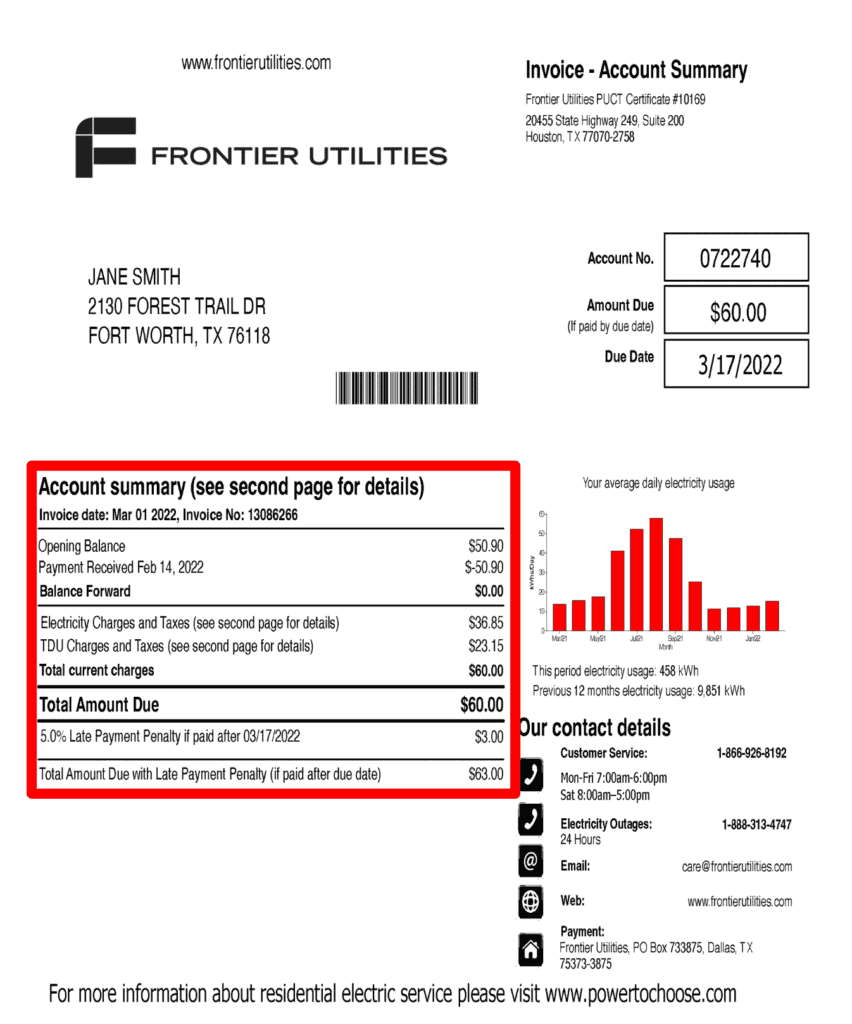
Summary of Charges: This section provides an overview of the total amount due, including energy charges, delivery charges, taxes, and other fees.

bill summary

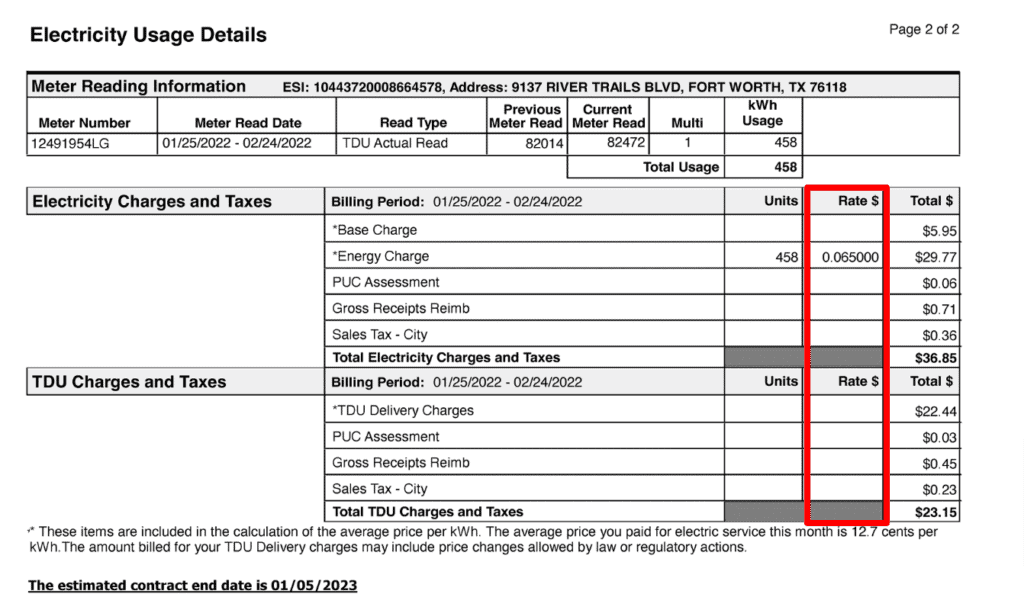
Detailed Usage: Here, you’ll find information about your electricity consumption during the billing period, usually measured in kilowatt-hours (kWh).

bill usage

Rate Information: This section details the price per kWh you’re charged for electricity, which may vary depending on your plan. 

bill rate

No idea what you are looking at? Check out How to Read Your Electricity Bill to get up to speed.

Gathering Necessary Documents

A thorough audit requires a bit of legwork to collect: 

Past Electricity Bills: You’ll want to have a bare minimum of 12 months of past bills on hand to dive into the problem. 

It’s even better if you have a full two years of bills to get a sense of year-over-year change. 

You should be able to access these on your electricity company’s account portal or by digging through your old mail. 

Electricity Contract: Get a hold of your Electricity Facts Label (EFL) and your Terms of Service (TOS). Digital copies should be available in your account portal, or your electricity company may mail you a copy. 

These contain all the details about the fees your electricity company can charge you.

Your Usage: The last and most important is your historical electricity usage data. 

I know it sounds scary, but if you have your bills, you already have this data right in front of you.

And if, for some reason, your bill doesn’t make your usage obvious: Hop onto Smart Meter Texas

Setting Up Your Audit Workspace

Now that you have all your docs in one place, it’s time to set up your workspace for the audit. I recommend using a spreadsheet app like Excel or Google Sheets. 

If you’re more of the old-school type, you can do this all by hand. Regardless of what tools you use, the more organized you are, the easier it is to spot any issues with your bills.

Here’s a list of helpful tools you’ll want: 

  • Spreadsheet 
  • Calculator 
  • Notepad and pen 

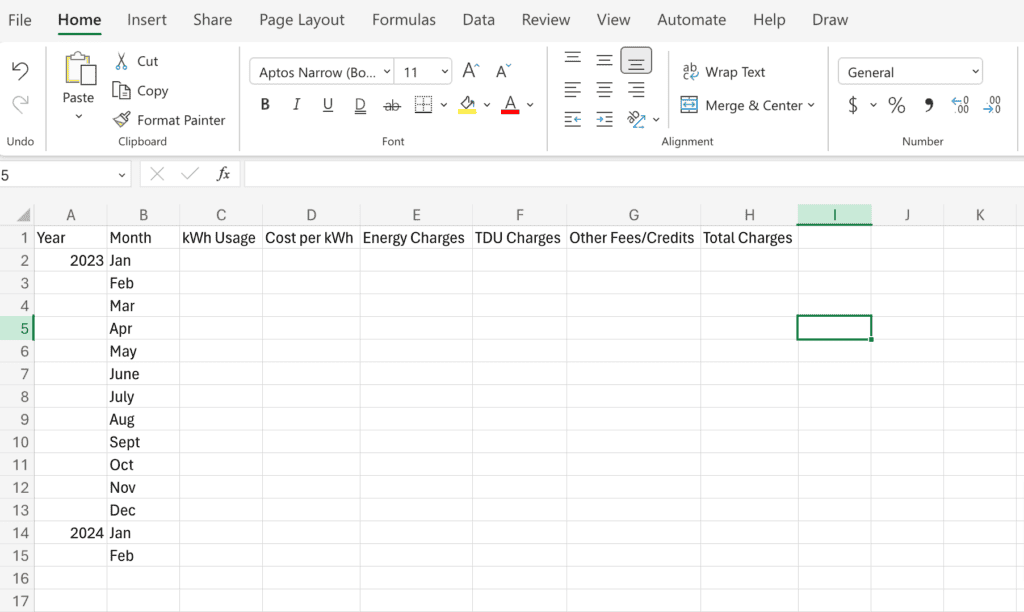
Whether using a spreadsheet or handwriting, I recommend setting up a table like the screenshot below to organize your work. 

setting up an electricity bill audit on excel

With your audit workspace ready and your documents at hand, you’re well-prepped to dive into the details of your electricity bill.

Step 1: Fill In Your Data 

All right, here comes the fun part. Your first step is to go through your bills line by line and fill out the spreadsheet. 

The most important columns are kWh Usage, Cost per kWh, and Total Charges. 

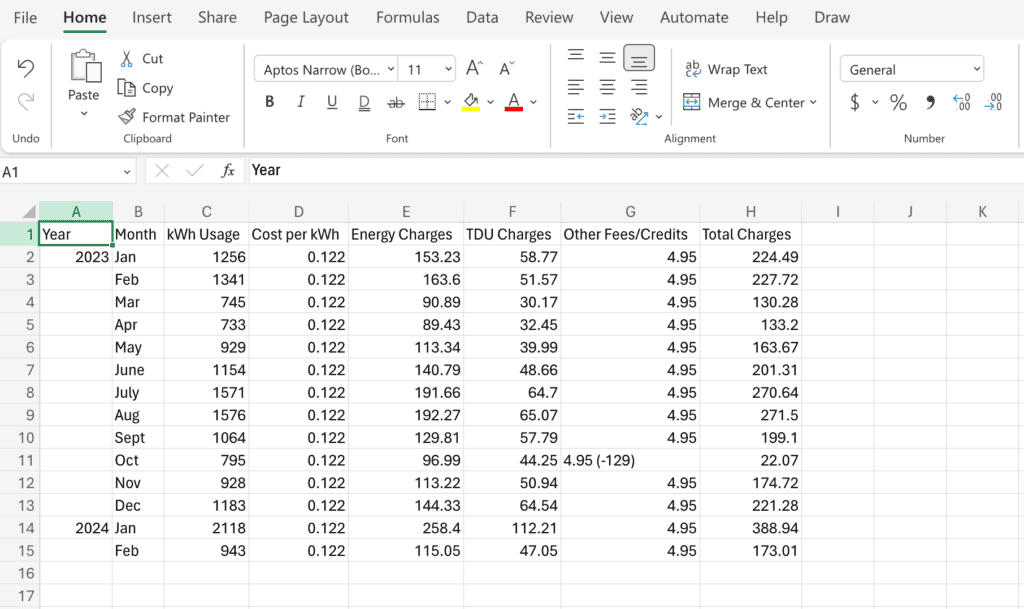
These will give you an overview of where your bill is currently. Here’s what mine looks like now all filled in:

example electricity usage for audit

Now, to address a few elephants before we dive into what we’re looking at here:

1. If you check my copy’s math, you’ll notice things don’t add up. I’ve left out the taxes that add around four to five dollars a month to keep the Other Fees/Credits column cleaner, and to be honest, I didn’t want to do the extra math.

I’d highly recommend you include those small charges to be as thorough as possible.

2. You’ll notice that in October 2023, there was a big credit on my bill, and I only paid $22.07 for electricity that month. That was very nice, but I had already paid that money.

The credit is my initial deposit to start the plan, being refunded after 12 months of service. You must figure out what is happening if you encounter anything unusual like this.

Now, let’s dive into our analysis.

Step 2: Check for Usage Jumps

Alright, let’s start digging into your bills. We first want to look at any patterns or trends in your monthly electricity usage. 

Doing this analysis gives you a better understanding of how much power you typically use and what factors may be causing spikes. 

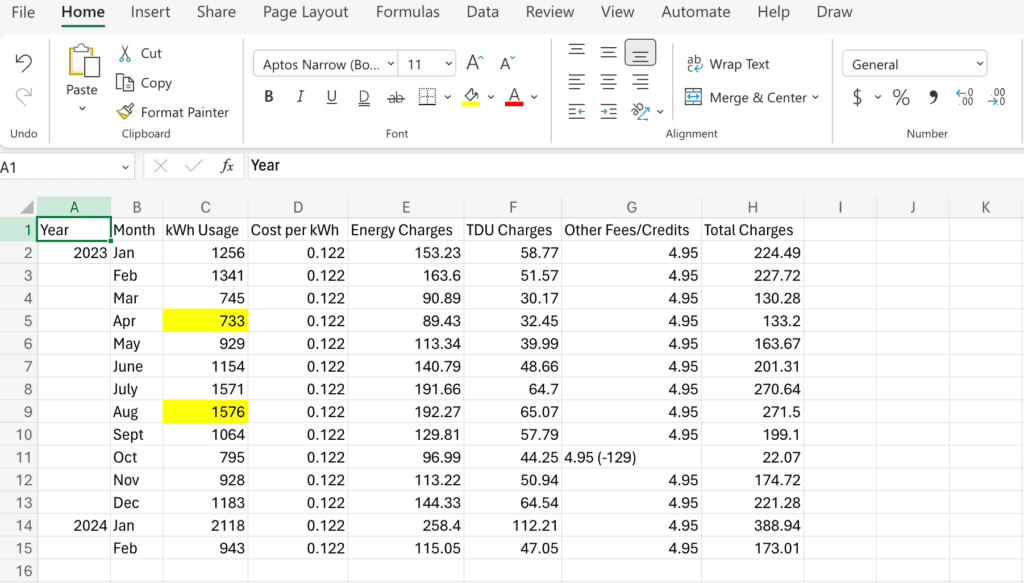
Looking at my example usage, you’ll see that my apartment used 733 kWh on the low end of things and hit a peak of 1,576 kWh in August 2023. 

example electricity bill peaks and troughs

The main reason to check for trends is to identify any anomalies or months where your usage was high compared to the norm. 

You’ll see from mine that January of this year had a big spike in usage. Those are the months we want to dig into. 

Big spikes could signal an issue like a malfunctioning appliance sucking up way more electricity than it should. 

Or maybe a billing error charged you for too much usage that month. 

Seasonal Patterns 

Before we discuss the anomalies on your bill, I want to address seasonal patterns quickly. 

Texas has pretty consistent seasonal patterns regarding usage. Most summers, think June through August. Your usage will jump as it gets hot outside. 

Then, after we make it through the fall, assuming we get some fall weather, our cold winters will also drive up your usage as you heat your home. 

Any time in between, you’ll see lower usage when the weather is mild. The important thing to remember here is that you want to “normalize” your billing data based on the season. 

Expect it to be higher in the summer and winter, but it shouldn’t exceed what you usually see. 

If you see massive spikes in the summer or winter, that could indicate: 

  • Your heating system is inefficient and driving up costs 
  • You have poor insulation, leading to heated/cooled air leaking out 
  • There could be issues with your thermostat settings 
  • Or maybe you’re just cranking electric space heaters on 

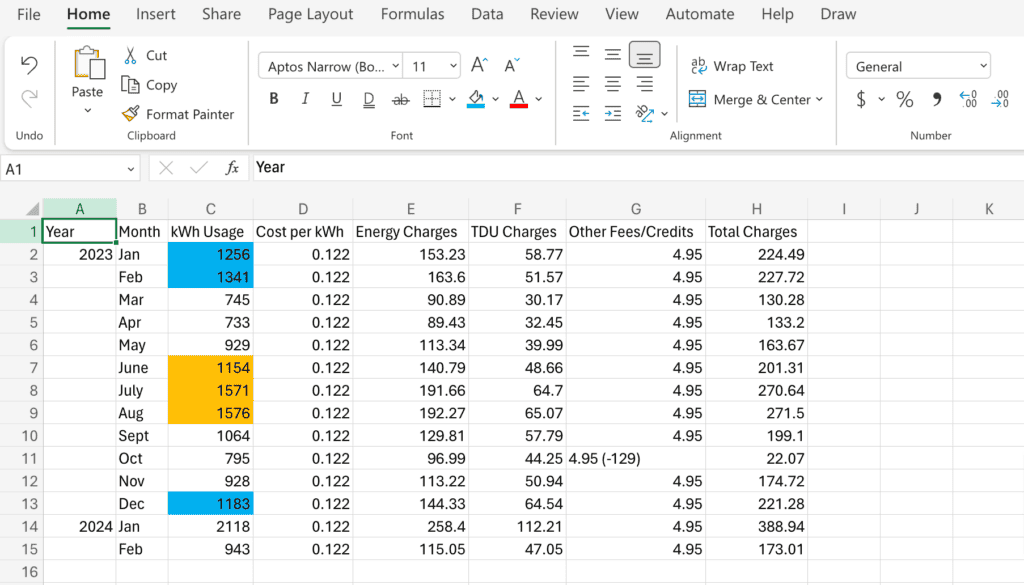
Here’s what summers and winters look like for my apartment.

example usage for summer and winter

Year-Over-Year Changes

In addition to checking monthly and seasonal weirdness, look at how your total annual usage changes from one year to the next. 

Did it jump up a lot after doing a significant home renovation that increased your square footage?  

Or did your usage drop after upgrading to new energy-efficient appliances and windows?  

Identify what lifestyle changes correlate to the increases or decreases you see. 

Heads up – if your provider raised rates one year, your annual costs could be higher even if usage stayed flat. 

If you’re on a fixed-rate contract, they would’ve sent you a renewal letter to sign before this could take effect. 

And if you just signed one, that might be why you got a high bill. 

So, keep an eye on the cost per kWh to distinguish legitimate usage changes from pure pricing hikes. 

Unexplained Anomalies

Circling back to those weird individual monthly spikes – if you can’t point to any specific reasons, like heat waves, new appliances, etc., to explain them, that could indicate: 

  • A faulty appliance or HVAC system undergoing a repair issue and running way less efficiently 
  • Potential problems with your electrical wiring, meters, or utility service  
  • Errors in the meter reading or billing calculations resulting in overcharges 

Those types of anomalies are where being detailed with this analysis pays off. Please don’t ignore them! 

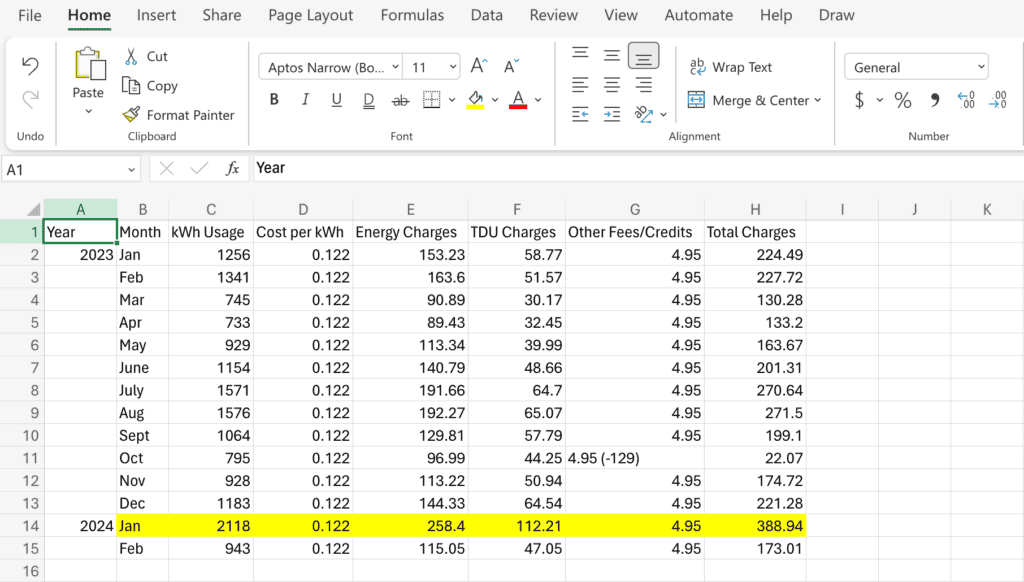
We’ll discuss diagnosing those a little further down the page. But first, you’re probably wondering about that crazy January bill I got. 

example of anomaly bill

If you’re sitting there connecting the dots, thinking that almost $400 seems nuts for an apartment electricity bill, I’m right there with you. 

I checked everything I could think of, going through our steps here. And unfortunately, the answer is boring. 

Check my usage that month. I used over 2,100 kWh monthly, while most apartments use more than 500 kWh. 

Guess what? I was working from home for almost a week since I was sick.

I ran my desktop, multiple monitors, laptop, TV, had my iPad plugged in, and pretty much anything else in my apartment that uses electricity. 

My wife took a day or two off work to hang out with me. If you remember, it was dang cold in January, and my apartment uses electric heat. 

So, I think it’s pretty clear why my usage was so high and I got a high bill. I used a lot of electricity and had to pay for it. 

Not all high bills mean you have to worry. Here are some common reasons legit usage spikes may happen that aren’t necessarily cause for concern:

  • Heat wave or cold snap making your heating/cooling work overtime 
  • Having more house guests than usual 
  • Running extra equipment like portable heaters or dehumidifiers 
  • New energy-hungry appliances like a hot tub or electric vehicle charger 

Step 3: Evaluate Your Usage

If you’re still reading, I’m guessing we haven’t pinpointed exactly what’s going on with your bill. 

We checked for trends and got a high-level view of your usage patterns. But what if the usage you got charged for wasn’t what you used? 

It sounds crazy, but it happens occasionally, and the best way to check is to verify the usage on your bill with your Smart Meter data. 

The reason this is so important? 

Your monthly usage and how much you pay for it are the two biggest factors affecting your bill. 

You want to ensure that no misreadings, billing errors, or efficiency issues artificially inflate that number. 

Smart Meter Data

Most Texas homes, apartments, and commercial buildings have smart meters installed that can be accessed anytime. 

The best part is that these smart meters let you get granular when analyzing your usage. If you want to dig in down to 15-minute intervals, you can. 

This gives you the most precise picture of how and when you use electricity.

Plus, you can double-check to ensure your electricity company charges you for something you’re not using. 

Accessing the Data

There are two options for how you access data from your smart meter.

First, we will use the data from your electricity company. 

That’s the data you see on your bill, so if we want to double-check that data, we should probably consider the second option. 

Door number two leads us to Smart Meter Texas, where you can make an account. 

With your bills in hand, it’s easy to access and analyze the data. If you’re unsure what you’re doing, check the link above for a walkthrough on setting up your account and digging in. 

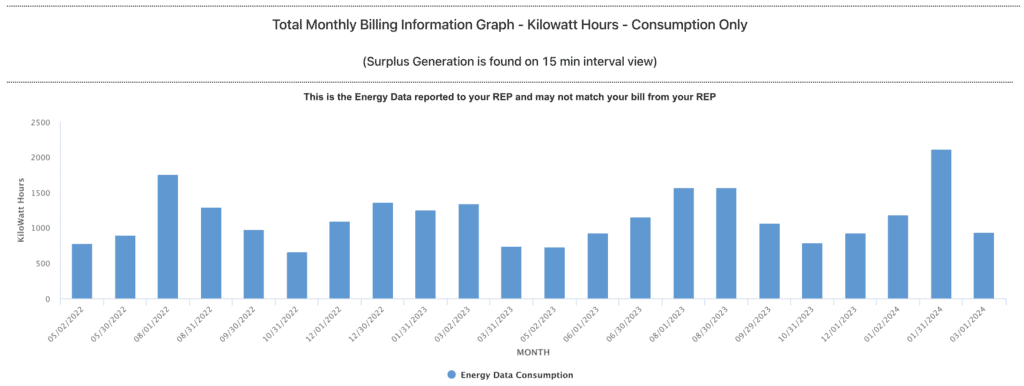
You’ll see monthly, daily, and 15-minute interval data from there. 

smt example graph

Evaluate What You See 

Now, it’s time to check and see if your electricity company is billing you fairly. Double-check the usage column on your spreadsheet or table for each month. 

See if it matches what you were charged for on your bill. The two should match exactly or be very close. 

If not, there could be an issue with the meter reporting incorrect readings, or your company is getting estimations instead of actual data. 

Understanding Billing Cycles

Quick side note here. It’s important to understand that bills don’t necessarily cover full calendar months of usage. 

Utility companies read meters, and providers cycle bills on their schedules every 28-32 days. 

So your “March” bill may include a few days from late February and early April if that’s when the meter readings happened. 

Don’t assume the billing period covers the complete 3/1 – 3/31 unless you verify the exact meter read dates. 

No Smart Meter? No Problem

If you don’t have a smart meter or can’t access that data for some reason, don’t worry. You can still manually record meter readings yourself each month. 

Most electric meters have an easy-to-read digital display that cycles between showing the latest reading and other meter information. Make a habit of writing that number down on the same day every month. 

Then, compare your recorded readings to the “meter read” line on your utility bills. If they don’t match up, there could have been an error. 

Potential Discrepancies

So what if you go through all this effort verifying meter readings, and the totals still don’t quite match the kWh usage on your bill? It’s time to put on your detective hat and dig in.

Possible reasons could include: 

  • Misaligned bill cycle dating that needs to be checked 
  • Errors or gaps in smart meter data reporting 
  • Mistakes by meter readers or providers estimating usage incorrectly 
  • Issues with your meter itself requiring testing/calibration 

Don’t panic if minor discrepancies exist in the 1-2% range. That can happen. But if you’re seeing variances over 5% with no good explanation, you’ll want to take that up with your electric company. 

Do More With Your Data

Beyond verifying the total, reviewing the hourly/daily breakdowns lets you see your patterns of when you use the most electricity. 

Is there a big spike in the evenings when everyone gets home? Or does usage ramp up more in the afternoon when summer heat maxes out? 

Identifying those peak times can help target where to focus efficiency efforts.

Like adjusting thermostat schedules, running appliances overnight, or upgrading to more efficient models of those energy hogs. 

Remember that, in rare cases, smart meters can have reporting glitches and miss recording data. 

If you see straight zeros for certain days/times when you know the home wasn’t vacant, it’s worth double-checking that those periods didn’t get underreported.

Step 4: Check the Cost per kWh

Your usage trends are mapped out; check. Cross-referenced billed usage and your smart meter data, check. 

Next up is checking if you’re being charged the correct rate on your monthly bills. 

Why check rates? Remember, the cost per kWh is one of the biggest line items that affect your bill. 

You want to make sure the rate charged matches what’s laid out in your contract.  

Otherwise, even a tiny overcharge on the rate will be multiplied across all your usage, and you’ll be ripped off. 

Fixed vs. Variable Rates 

If you’re like most Texans and have a fixed rate, it should be pretty straightforward to double-check the rate listed on your bill and compare it to the rate on your EFL. 

I wouldn’t be doing my job if I didn’t note here that the rate you see on that EFL isn’t precisely what you end up paying. 

Your EFL lays out the “calculation” for the rate you should be paying. The frustrating part is that it usually means what you pay for 500 kWh isn’t the same as what you pay for 1,500 kWh. 

You’ll need to do some math to determine how your rate is calculated.

Dive into the details: How to Calculate the True Cost of Any Texas Electricity Plan

The general rule of thumb is that your bill will show what you were charged for your usage, so it should be relatively straightforward to check the math. 

For those living wild with a variable-rate plan, you’ll likely need to check your company’s website or historical rate notices to find the accurate rate for each billing cycle month. 

Either way, make a note of that rate for each monthly bill. 

Verifying the Charges

In your spreadsheet, calculate the supply charge portion of each monthly bill based on the appropriate rate and your total kWh usage. So, for example: 

  • July 2022 Usage: 1200 kWh  
  • Contracted Rate: $0.098 per kWh 
  • Expected Supply Charge: 1200 kWh x $0.098 = $117.60 

Then, compare your calculated expected charge to what was billed on that month’s statement’s supply or energy portion. 

If the amount billed is higher than expected, it could indicate that you were overcharged on rates for that month. 

Rate Overcharges 

Any significant overcharges on supply rates are worth disputing with your provider. The impact can increase over 12 months, so don’t let it slide. 

For instance, you were billed at $0.11 per kWh instead of the $0.098 contracted rate. 

That’s just a $0.012 difference multiplied by 1000 kWh monthly usage.

You overpaid $12 for that one billing cycle alone. 

Now, add that up for every month of the year. That’s over $200 down the drain you could’ve used for something else. 

Prorated Rates 

One scenario that can confuse you is when providers calculate bills with prorated rates for partial months if meter readings don’t align with your billing cycle dates. 

For example, maybe your July bill was: 

  • 15 days at $0.10/kWh  
  • 16 days at $0.12/kWh 

This results in a blended average rate that might look higher than your fixed contract price but is technically correct based on the calendar proration. 

Just be aware of potential situations like that when investigating rates. 

One Final Caveat on Rates 

The last thing I want to mention about the electricity rate side is that I am only covering what I would call straightforward plans here. 

Straightforward plans don’t include anything like bill credits or time-of-use discounts like free nights and weekends. 

If you are on a plan with bill credits or time-of-use discounts, the rate you pay can jump wildly depending on whether you are getting those discounts. 

That means you could get a discount and a reasonable rate one month, and the next, you could miss out on it and be stuck with a high bill. 

If you have one of these plans, I highly recommend diving into our Calculating the True Cost of Any Texas Electricity Plan page I mentioned. 

It covers the details of calculating the costs of these types of plans alongside the exact formulas you’ll need.

Dive into the details: How to Calculate the True Cost of Any Texas Electricity Plan

Step 5: Check Other Charges on Your Bill 

The fifth and final step you’ll want to take is going through all the other charges on your bill. 

Things like: 

  • Delivery/TDSP fees from your utility 
  • Metering charges or monthly base fees 
  • State taxes and utility assessments 
  • Any miscellaneous “other” charges 

These other line items can contain incorrect calculations, fees that violate your contract terms, or charges for which you don’t understand the justification. 

Double-check these charges with your contract’s current TDU fees and the TOS doc.  

Identifying and disputing those can lead to significant savings as well. 

Delivery Charges 

For delivery charges (TDSP, TDU, or transmission fees), you should look up the approved rates for your specific utility and delivery area. 

Remember that they can change twice yearly, so you might see a change on your bill when updated. 

Calculate the delivery charge based on your monthly kWh usage and compare it to what’s on your bill. 

Anything weird may be an overcharge worth disputing. 

Fixed Fees 

Whether it’s a flat monthly charge, metering fee, minimum usage fee, or anything else – verify that any fixed recurring fees match what’s listed as allowable in your contract’s EFL and TOS documents. 

Taxes & Other Charges 

For taxes and other percentage-based charges like utility assessments, validate that the percentage rates and calculations based on your usage are accurate. 

Check that sales tax is being applied correctly to only the energy supply and delivery charges, not duplicated on top of taxes already included. Identify any erroneous charges you can’t find defined. 

When in doubt, have your provider explain each charge line by line and substantiate it with your contract details. 

Don’t let ambiguous “other charges” slide if you don’t get a clear justification. 

Auditing, Disputing & Savings 

And there you have it – you’ve audited your electricity bills like a forensic accountant. 

You’ll uncover anything wrong with your bill by analyzing historical trends, verifying meter readings, checking rates, and scrutinizing every line-item charge. 

You can dispute with evidence and get corrections or credits issued from there. 

Over time, mastering this process puts you in control of your monthly electricity costs. Any savings might not seem massive monthly, but they can add up over a year. 

More importantly, the power is yours to hold your electric providers accountable to the agreed-upon rates and terms. 

FAQs

How do I read my electricity bill? 

Start by locating these key sections:  

  • Summary of total charges for the period 
  • Meter usage readings in kWh   
  • Detailed line items like energy supply charges, delivery fees, taxes   
  • Rate/plan details showing price per kWh

No idea what you are looking at? Check out How to Read Your Electricity Bill to get up to speed.

What should I do if I find discrepancies on my bill?

First, validate any suspected errors by checking rate/fee details against your contract terms. Gather evidence like calculations and past bills for reference.

Contact your provider and politely request an explanation or correction. If that doesn’t work, file a formal complaint with the Public Utility Commission of Texas (PUCT). 

How can I reduce my electricity bill?

Give these a try to cut down your electricity costs:

  • Implement energy efficiency upgrades like insulation, weatherization, and new appliances. 
  • Choose an electricity plan optimized for your usage patterns and rates. 
  • Practice energy-saving habits with programmable thermostats when you use electricity. 
  • Consider renewable energy options like green plans or solar. 

Is switching electricity plans worth the effort?

If your usage patterns or household situation has changed, switching plans can save hundreds per year by better aligning with your needs. 

But factor in any termination fees from your current contract against potential savings. Sometimes, waiting for your contract term to end makes more sense.

ComparePower 57500 5-Star Ratings Reviews

Any product or company names, marks, or logos shown on this page are the property of their respective owners. Compare Power is an unaffiliated, independent marketplace. Get unbiased, accurate information backed by our commitment to editorial integrity.

Why is my electric bill so high?

Hey there, fellow Texan. First off, we get it. That electric bill is no joke; you’re probably feeling shock, anger, and confusion right now.

But take a deep breath – you’re not alone, and we’re here to help.

Let’s get real about that electric bill that’s been giving you heart palpitations.

Nine times out of ten, these jaw-dropping bills boil down to a few culprits:

Maybe that heatwave from hell had your AC working overtime, causing your usage to skyrocket.

Or perhaps your electric company conveniently “forgot” that your sweet introductory rate was expiring, leaving you blindsided by their outrageous holdover pricing.

Maybe you missed a payment, and those pesky late fees pile into one massive, ugly add-on charge.

Hey, life happens – we’re not here to judge.

And let’s not forget the chance that those number-crunchers got their wires crossed because spoiler alert: they don’t always have actual humans double-checking these bills.

But don’t worry, we’ve got your back.

No matter which boogeyman haunts your utility budget, we’re here to help you hunt it down and show it who’s boss.

So, are you ready to take control of your electricity bill and show those power company bullies who have the power?

Is Your Sky-High Bill Legit? Audit It Like a Pro

Hey, we get it—that sky-high electricity bill has you scratching your head and wondering what’s happening.

First things first, let’s make sure your bill is accurate.

Auditing your electricity bill is the first step to understanding why it’s so high.

It involves comparing your current charges to past statements, reviewing each line item for any sneaky errors, and ensuring your usage matches your charges.

If something doesn’t add up or you’re feeling lost in all the technical jargon, don’t sweat it – we’ve got your back.

Breakdown your bill: Check out our How to Audit the Hell Out of Your Electricity Bill.

Is Your Electricity Usage Going Haywire? Find Out What’s Driving Your Bills Up

You’ve audited your bill like a pro, and everything seems to line up.

But your electricity usage? That’s a whole different story.

If your consumption has been going through the roof lately, don’t panic—we’re here to help you understand.

There are plenty of sneaky culprits that could be causing your usage to spike, like:

  • That ancient, energy-guzzling fridge in your garage that’s working overtime
  • A faulty thermostat that’s keeping your AC running 24/7
  • Those pesky “energy vampires” (a.k.a. electronics that drain power even when they’re turned off)
  • Or maybe you’ve just been cranking the heat during those chilly Texas nights

Whatever the reason, we’ve got you covered.

So, ready to take control of your electricity consumption and show those bills who’s boss?

Start by determining what’s driving your usage and how to tame it.

High usage, high bill: Check out Has Your Electricity Usage Gone Wild? to get to the bottom of those usage spikes.

High Bill? Your Electricity Plan May Not Be Your Best Match

So, you’ve ruled out usage spikes as the culprit behind your sky-high electricity bills.

But have you taken a closer look at your electricity plan?

If you’re on the wrong plan, you could pay more than you need.

Here are some signs that your current plan might not be the best fit:

  • Your contract has expired, leaving you with shockingly high rates
  • You’re on a variable rate plan, and the market prices have skyrocketed
  • Your new plan looked great on paper, but now you’re facing unexpected bill shock
  • You’ve moved to a new home, and your old plan doesn’t quite fit your new lifestyle

If any of these sound familiar, don’t worry – you’re not stuck with that mismatched plan forever.

So, are you ready to ensure you’re on the best electricity plan for your needs?

Start by finding out if your current plan is a good match and exploring your options for switching.

Is your plan the right one? Jump into Why Your Electricity Plan May Be Causing High Bills to figure out what to do about that bad plan.

Bill Problems: Is Your Electricity Bill Giving You a Headache?

You’ve double-checked your usage, audited your bill, and ensured you’re on the best plan – but your electricity bill still makes you want to pull your hair out.

What gives? It might be time to take a closer look at your payment situation.

Here are some common payment-related issues that could be causing your billing woes:

  • You missed a payment deadline, and now you’re facing late fees and penalties
  • Your billing cycle changed, leaving you with a longer-than-usual billing period
  • There’s an error on your bill, but you’re not sure how to spot it or what to do about it

If you’re nodding at any of these, take a deep breath – we’ve got your back.

So, are you ready to take control of your electricity bill and say goodbye to payment-related headaches?

Get your electricity account back on track: Explore Don’t Let Billing Issues Shock Your Wallet to take back control of your electricity bill.

Texas Electricity Bill Too High? Help is Available

If you’ve tried everything and you’re still struggling to keep up with your electricity bills, don’t lose hope.

Texas offers a variety of assistance programs designed to help residents manage their energy costs and avoid disconnection.

Get quick access to:

  • Information on programs for low-income households
  • Eligibility criteria and application guidance
  • Tips and resources for a successful application

Don’t let high electricity bills keep you up at night: Explore Assistance Paying Your Electricity Bill to see your options and get your needed help.

Take Control of Your High Electricity Bills Today

This guide covers a lot of ground, from auditing your bill and identifying usage spikes to understanding your electricity plan and navigating payment issues.

And if you’re still struggling to make ends meet, we’ve also explored the various assistance programs available to Texas residents.

Remember, you’re not alone in this.

High electricity bills are a common problem, but with the proper knowledge and resources, you can take control of your energy costs and find relief from overwhelming expenses.

Skipped to the bottom to avoid reading? Here are the key takeaways from this guide:

  • Audit your bill: Always start by reviewing your electricity bill for accuracy and identifying any discrepancies or unusual charges.
  • Monitor your usage: Monitor your electricity consumption and identify any spikes or changes contributing to your high bills.
  • Review your plan: Make sure you’re on the best electricity plan for your needs, and consider switching if you find a better deal.
  • Stay on top of payments: Avoid late fees and other penalties by staying on top of your payments and reaching out to your provider if you’re having trouble.
  • Seek assistance when needed: Don’t hesitate to explore the various assistance programs available to Texas residents if you need help managing your electricity costs.

Ready to take action? Read: How to Lower Your High Electric Bill With Expert Advice.

By following these steps and using our resources, you can take control of your electricity bills and find the relief you need.

If you have any further questions or need additional support, don’t hesitate to reach out.

Our team is always here to help you navigate the complex world of electricity billing and find the best solutions.

ComparePower 57500 5-Star Ratings Reviews

Any product or company names, marks, or logos shown on this page are the property of their respective owners. Compare Power is an unaffiliated, independent marketplace. Get unbiased, accurate information backed by our commitment to editorial integrity.

Variable Electricity Rates in Texas

In the dynamic landscape of the Texas electricity market, you have many choices when it comes to powering your home.

Among these options, variable-rate electricity plans have emerged as a potentially attractive choice for those seeking flexibility and the opportunity to capitalize on market fluctuations.

However, before diving in, it’s crucial to understand the intricacies of these plans and weigh the potential benefits against the risks.

What are Variable-Rate Electricity Plans?

Variable-rate electricity plans are pricing structures in which the cost per kilowatt-hour (kWh) of electricity can fluctuate based on market conditions, such as wholesale prices, weather patterns, and supply and demand.

Unlike fixed-rate plans, which offer a stable price for the duration of a contract, variable-rate plans are subject to change.

Here’s a quick comparison of the key features of variable-rate and fixed-rate plans:

FeatureVariable-Rate PlansFixed-Rate Plans
Price per kWhFluctuates with market conditionsRemains constant throughout the contract
Contract lengthMonth-to-monthTypically 6, 12, or 24 months
Risk of price spikesHighLow

The Potential Benefits of Variable Rates

The primary draw of variable-rate plans is their flexibility. With no long-term contracts or early termination fees, consumers can switch plans or providers when market conditions change.

This flexibility can particularly appeal to those uncertain about their long-term electricity needs, such as those who need temporary living arrangements.

Read: Month-to-Month Electricity Plans in Texas

The Risks Associated with Variable Rates

When wholesale electricity prices spike due to extreme weather events, supply disruptions, or unexpected demand surges, consumers on variable-rate plans can face high bills.

During the February 2021 winter storm in Texas, many consumers on variable-rate plans faced exorbitant electricity bills due to the sudden spike in wholesale prices.

Some customers reported bills exceeding $1,000 for just a few days of electricity use, highlighting the potential risks of these plans.

This price volatility can make budgeting for electricity costs challenging and result in financial hardship for those unprepared for sudden rate increases.

Recent Changes in the Texas Electricity Market

In the wake of the February 2021 winter storm, the Texas Legislature has taken steps to protect consumers from the risks associated with wholesale-indexed variable-rate plans.

House Bill 16, approved by both chambers, bans residential and small-business electricity customers from signing up for plans that directly pass wholesale electricity prices to customers.

This legislative change and the lessons learned from Griddy Energy underscore the importance of understanding the risks associated with variable-rate plans and the need for strong consumer protections in the Texas electricity market.

Is a Variable-Rate Plan Right for You?

Choosing a variable-rate electricity plan depends on your circumstances, risk tolerance, and willingness to manage your energy costs actively.

Consider your budget, energy usage, and market savvy before choosing.

If you accept the risks and actively manage your electricity costs, a variable-rate plan like the TXU Energy Month-to-Month Flex Forward plan may be viable.

This plan offers a low monthly rate with no long-term contract or cancellation fees, allowing you to change plans without penalty.

Enter your zip code, then click ‘All Plans’ to find and enroll in the TXU Energy Month-to-Month Flex Forward plan.

Fixed-rate electricity plans offer most Texas households the best combination of price stability, predictability, and consumer protection.

By locking in a set price per kWh for the duration of your contract, you can avoid the risk of unexpectedly high bills due to market volatility and make budgeting for your electricity costs more manageable.

While variable-rate plans can offer potential savings during low market prices, the risks associated with these plans often outweigh the benefits for the average consumer.

In light of recent market changes and the increasing focus on consumer protection, it is strongly recommended that most Texans choose fixed-rate plans to minimize their exposure to price fluctuations.

Read: Fixed vs. Variable Rate Electricity: Which is Better?

How to Choose Your Best Electricity Plan in Texas

Choosing the best electricity plan for your needs involves understanding your energy consumption patterns, priorities, and risk tolerance.

To make an informed decision, follow these steps:

  1. Understand your energy consumption patterns and priorities.
  2. Use ComparePower, a highly-rated energy marketplace, to compare plans and providers.
  3. Take advantage of ComparePower’s usage-based shopping tools to find plans that align with your energy needs.
  4. Shop with your usage history to get personalized plan recommendations.
  5. Consider contract length, renewable energy content, and additional features.
  6. Easily enroll in your chosen plan online through ComparePower.

Following the step-by-step guide in this article, you can save hundreds of dollars a year on your electricity bills and avoid the risks associated with variable-rate plans.

Read: How to Choose the Best Electricity Plan in Texas

Find the Best Energy Plan for Your Home

Don’t let the complexity of the Texas electricity market keep you from finding the best energy plan for your home.

Enter your zip code to get personalized recommendations and transparent pricing information so you can make an informed decision about your home’s electricity.

Compare Rates Near You

ComparePower 57500 5-Star Ratings Reviews

Any product or company names, marks, or logos shown on this page are the property of their respective owners. Compare Power is an unaffiliated, independent marketplace. Get unbiased, accurate information backed by our commitment to editorial integrity.

The Hidden Costs Driving Up Your Texas Electricity Bill

When Diane, a hard-working single mom from Houston, opened her electricity bill, she was stunned. Her monthly statement had skyrocketed from $120 to an eye-watering $185 – and she had no idea why. Diane felt frustrated, confused, and worried about how this unexpected expense would impact her tight budget.

Unfortunately, her story is all too common in Texas. Countless residents pay “holdover rates” without even realizing it. In this article, we’ll explain holdover rates, why they exist, and—most importantly—how to protect yourself from falling victim to this costly trap.

What Are Holdover Rates?

In the Texas electricity market, a holdover rate is a variable rate that your Retail Electricity Provider (REP) automatically applies to your account when your fixed-rate contract ends and you are in electricity limbo (i.e., between contracts).

These rates are inextricably tied to the real-time market price of electricity, which can fluctuate wildly and soar during high demand.

While holdover rates are legal, many Texans find this practice misleading and unfair, taking advantage of their busy lives and limited time.

Read: Texas Electricity Contract Expiration Guide →

Retail Electricity Providers

In the Lone Star State, power generators are paid for their electricity in an energy-only market. You (the consumer) don’t purchase electricity directly from power generators. Instead, you rely on a Retail Electricity Provider as an intermediary.

Your REP is tasked with forecasting demand and purchasing the right amount of electricity in advance, often through fixed-rate contracts, to meet projected needs. When your fixed-rate contract with your REP expires, and you haven’t chosen a new plan, you may unknowingly be placed on a holdover rate.

Read: How Electricity Contract Renewals Work in Texas →

The Holdover Rate Trap

For REPs, holdover rates safeguard against the uncertainty of not knowing how much electricity to purchase for customers whose contracts have expired. By switching these customers to a variable rate, REPs can adjust their purchases based on actual consumption, minimizing their risk of buying too much or too little power.

However, this risk-mitigation strategy comes at a steep cost for consumers, who are left exposed to the volatile whims of the real-time electricity market.

Your Electricity Plan

If you’ve ever been shocked by a sudden spike in your Texas electricity bill, you might be one of the many Texans who have been switched to a “holdover rate” without realizing it.

So, how can you tell if you’re on a holdover rate? Start by scrutinizing your latest electricity bill or logging into your REP’s online portal. Look for terms like “variable rate” or “month-to-month” in your plan details. Also, look for the contract expiration date. If your contract has expired, you’re likely on a holdover rate.

Read: How to Switch Electricity Companies in Texas

Avoiding Holdover Rates

The good news is that you can take control of your electricity costs and avoid falling victim to holdover rates. To protect yourself from the financial burdens of holdover rates, start by marking your contract expiration date on your calendar and setting a reminder to begin shopping for a new plan at least a month in advance.

Better yet. Schedule a reminder now, and we’ll email you when it’s time to shop.

As your contract nears its end, dedicate time to researching and comparing plans from various REPs. Utilizing comparison tools, like those offered by ComparePower, can help you find the most competitive plan based on your unique usage patterns.

In Texas, you can switch electricity providers without incurring early termination fees within 14 days of your contract expiration date. 

Texas Administrative Code, Title 16, Part II, Chapter 25, Subchapter R, §25.475

Make your switch within this window to avoid being rolled onto a costly holdover rate. Repeat this process annually to ensure you always secure a competitive electric rate for your home.

Stuck in a contract? Schedule a reminder, and we’ll help you find a better plan before your contract expires.

How ComparePower Helps

We empower you (the Texas energy consumer) with the tools and information to make informed decisions and avoid costly pitfalls like holdover rates. ComparePower gives you access to:

  • Transparent pricing information: We offer all-inclusive pricing and break down the costs of each plan, including hidden fees and discounts, so that you can make apples-to-apples comparisons.
  • Personalized recommendations: Live Link™ analyzes your unique usage data to identify the plans that will save you the most money based on your electricity consumption.
  • Unbiased advice: As an independent marketplace, we’re not beholden to any particular electricity company. Our sole focus is helping you find the best plan for your needs and budget.
  • Step-by-step guidance: Our friendly Texas-based customer service team will walk you through the switching process and ensure a seamless transition to your new plan.
  • Reminders when it’s time to switch: ComparePower will remind you to switch plans at the right time.
Eric Eldridge

Easy to use, helped me choose the right power plan for me.

Eric Eldridge

Say Goodbye to Holdover Rates

After reading about the shocking truth behind holdover rates and how to avoid them, you may wonder how to choose the best electricity provider in Texas.

Switching electricity providers is one of the easiest ways to save money on your energy bills in Texas. Don’t let holdover rates drain your wallet for another month. Start comparing plans today and take control of your energy costs with ComparePower.

Take Control of Your Energy Costs

The following article will guide you through selecting the best provider and plan for your home. You’ll learn:

  • The role of retail electricity providers and how they differ from utility companies
  • Why price should be the primary factor in choosing a provider
  • How to calculate the true cost of an electricity plan based on your usage
  • The difference between fixed-rate and variable-rate plans
  • How to use ComparePower’s tools to compare plans and find the best deal

With this knowledge, you can confidently shop for a new electricity plan and take control of your energy costs.

Read: How to Choose the Cheapest Electricity Provider in Texas →

Don’t spend another month overpaying for electricity. Take control of your energy costs today by comparing plans and making the switch with ComparePower.

How to Get Your kWh Usage in Texas

To obtain your kilowatt-hour (kWh) electricity usage data in Texas, there are three main methods available:

  1. Review the meter readings section of your monthly electricity bill from your retail electric provider. This will show your current and previous meter readings in kWh, allowing you to calculate usage.
  2. Log in to your provider’s online account dashboard if offered. Most providers give online access to view historical month-by-month kWh usage data.
  3. Sign up for Smart Meter Texas (SMT), a free platform endorsed by the Public Utility Commission of Texas. SMT allows residential customers with smart meters from participating utilities to access detailed 15-minute interval data, daily readings, monthly billing info, and more.

Method 1: Review Your Electricity Bill

Your retail electric provider’s monthly electricity bill contains your kWh usage for that billing period. Locate the “meter readings” section or “electricity consumption” to find the current and previous meter readings in kWh. Subtract the previous reading from the current reading to calculate your usage.

Method 2: Login to Your Provider’s Online Dashboard

Most retail electric providers in Texas offer online account dashboards where you can view your historical kWh usage data month by month. You must register for an online account on your provider’s website to access this.

Method 3: Sign Up for Smart Meter Texas

Smart Meter Texas allows Texas residential customers to access detailed energy usage data, including 15-minute interval data, daily readings, and monthly billing information.

However, your home must have a smart meter installed by a participating utility – AEP Texas, CenterPoint Energy, Oncor, Texas-New Mexico Power, or Lubbock Power and Light.

To register on www.smartmetertexas.com, you’ll need to provide:

  • Your name and email
  • ESIID number and meter number (found on your electricity bill)
  • The name of your retail electric provider

Once registered, you can log in to view your energy usage graphs and tables, export data to CSV/XML, set up automated data deliveries via subscriptions, and more.

The key steps are:

  1. Go to www.smartmetertexas.com and click “Sign Up”
  2. Select “Residential” as the account type
  3. Enter your name, email, ESIID, meter number
  4. Search and select your retail electric provider
  5. Create a user ID and agree to the terms
  6. Complete registration using the temporary password emailed to you

In Summary

Keeping tabs on your kWh electricity consumption allows you to analyze usage patterns, identify cost-saving opportunities, and monitor the impacts of any energy efficiency initiatives.

Leveraging tools like Smart Meter Texas lets you take control of your energy costs and footprint in Texas.