Any product or company names, marks, or logos shown on this page are the property of their respective owners. Compare Power is an unaffiliated, independent marketplace.Get unbiased, accurate information backed by our commitment to editorial integrity.
Smart Tips for Cool Summer Savings
Summer is upon us, bringing along the tantalizing aroma of backyard Texas barbecues and the joyous hum of neighborhood get-togethers
Of course, with the blazing sun, our electricity meters start to spin a bit faster, and those pesky energy bills start to rise.
But don’t worry, we’re here to help you stay cool while saving some cash on your electric bills.
The important point to keep in mind even before we dive into the tips is to regularly check your electricity contract’s end date.
We can’t stress this enough – getting stuck on a holdover rate during the peak of a Texas summer can take a hefty toll on your wallet.
So, be proactive and switch electricity providers when your contract is about to expire to avoid unpredictable high bills this summer.
Compare Rates Near You👇
Texas Summer Money-Saving Tips
Now that we’ve covered that essential tidbit, let’s delve into our handy guide to help you enjoy the Texas summer without the worry of high energy bills.
Thermostat Strategy: Your thermostat is more than just a temperature gauge – it’s your secret weapon against high energy bills. Set it a few degrees higher when you’re away or asleep, and see the savings add up. Want to make it even easier? Consider a smart thermostat to automate these adjustments.
Power of Shade: You don’t have to rely solely on the AC to escape the Texas heat. Close your blinds or curtains during the hottest parts of the day and take advantage of natural shade. If you have trees or shrubs near your windows, they can act as a natural sunblock, helping keep your house cooler.
Energy-Efficient Cooling: An energy-efficient air conditioner can be a game-changer if your current unit is showing signs of age. Look for models with a high SEER (Seasonal Energy Efficiency Ratio) rating. They keep you cool and help save on electricity costs.
Fans Are Your Friends: Ceiling fans and portable fans can aid in maintaining a comfortable indoor climate. But remember, fans cool people, not rooms, so turn them off when you leave the room.
Find Energy Hogs: Ever wondered which appliances consume the most power? Time to find out and consider replacing them with more energy-efficient models. Even small changes like swapping out incandescent bulbs for LEDs can result in significant savings.
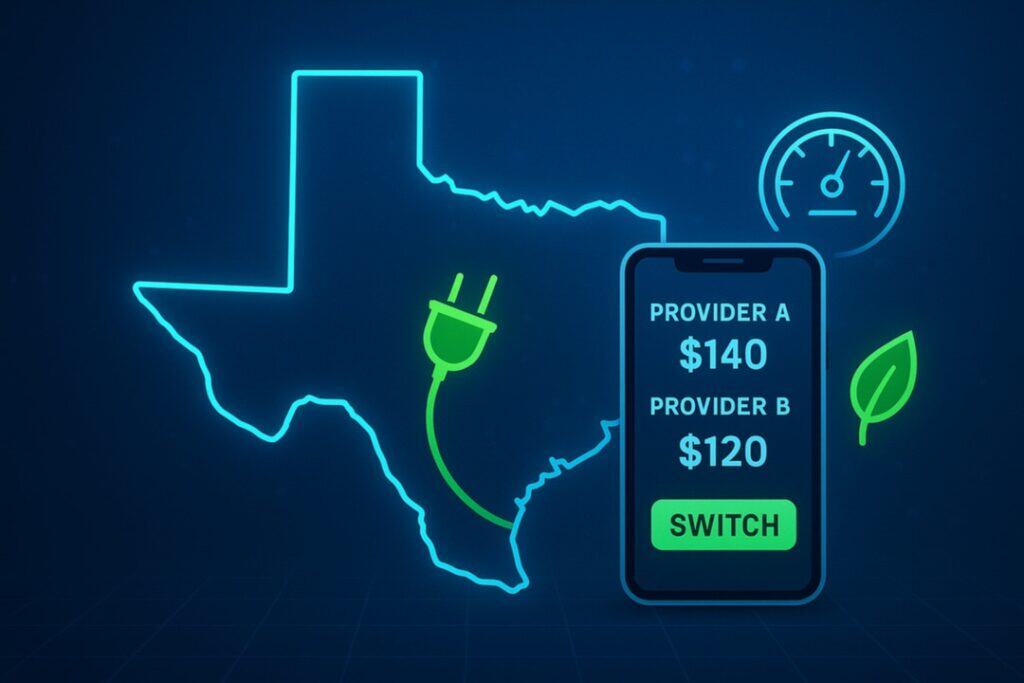
Switch Electric Providers: Do not let your fixed-rate contract expire. There are hundreds of electricity plans in Texas. Do your homework and find one that suits your lifestyle and budget. If you’re environmentally conscious, many providers offer renewable energy plans.
Summer in Texas is all about warmth, joy, and priceless moments under the sun. We’re here to ensure that your energy bills don’t cast a shadow over your summer fun.
If you have any questions or need assistance finding the right plan our team of local energy experts is here to help!
Still have questions?
Our Texas-based energy experts are here to help:
Live Chat (bottom right, Mon-Fri: 8:30 AM – 6:30 PM) Call 855-441-3030 (Mon-Fri: 8:30 AM – 6:30 PM Sat: 9 AM – 4:30 PM) Email [email protected]
Any product or company names, marks, or logos shown on this page are the property of their respective owners. Compare Power is an unaffiliated, independent marketplace.Get unbiased, accurate information backed by our commitment to editorial integrity.
Texas winter electricity guide
Texas residential electricity rates have stabilized after summer 2025 peaks, creating a favorable window for consumers to lock in competitive fixed-rate plans heading into winter 2025-2026. Rates currently average 15.2-17.0¢/kWh, including delivery costs, with competitive 12-month fixed plans available at 11-13¢/kWh—roughly 12% below the national average. However, ERCOT warns of “slightly higher reliability risk” this winter due to growing demand from data centers and the potential for extreme cold events similar to patterns preceding Winter Storm Uri.
Current rates favor early lock-in before winter peaks
The Texas electricity market has cooled significantly from summer 2025 highs. While June 2025 saw 12-month plans averaging 16.5-17.0¢/kWh, fall rates have dropped to 14.9-16.2¢/kWh—a decline of roughly 10-15%. This seasonal pattern makes late fall an acceptable, though not optimal, time to secure a fixed-rate contract.
Regional rate differences matter. Oncor (Dallas area) averages 16.28¢/kWh, while CenterPoint (Houston) runs higher at 16.74¢/kWh. AEP Texas North customers pay the most at 17.98¢/kWh. These differences stem from infrastructure costs and delivery fees that remain constant regardless of which retail provider you choose.
The wholesale market supports moderate retail pricing through winter. ERCOT North Hub prices hit $28.41/MWh in October 2025, down 14.5% from September’s $33.23/MWh. Natural gas prices remain relatively low, and solar capacity additions continue suppressing wholesale costs during daylight hours. However, forward contracts for 2026-2027 trade above $50/MWh, reflecting market uncertainty around growing demand from AI data centers and potential extreme weather events.
Texas homes consume 23% more electricity than the national average
The average Texas household uses 1,094-1,176 kWh monthly—about 23-25% above the national average of 863-886 kWh. This premium reflects Texas’s larger homes (averaging 2,170 square feet) and its extreme climate.
Season
Typical Monthly Usage
Typical Bill at 15.5¢/kWh
Summer peak
1,200-1,400+ kWh
$186-217
Winter
800-1,000 kWh
$124-155
Spring/Fall shoulder
700-900 kWh
$109-140
Heating type dramatically affects winter bills. Approximately 60-61% of Texas homes use electricity as their primary heating source—far above the national rate of 39%. Heat pumps deliver 2-3x better efficiency than gas furnaces in Texas’s typically mild winters, operating optimally above 40°F. However, when temperatures drop below 35°F, efficiency decreases significantly, and auxiliary electric resistance heating may kick in, leading to higher bills.
For most Texas homeowners, heat pumps represent the best long-term investment. Dallas-Fort Worth residents facing occasional hard freezes should consider dual-fuel systems that use heat pumps above 35-40°F and switch to gas backup during extreme cold—offering the best of both efficiency and reliability. An HVAC contractor can assess your home’s specific needs and recommend the right system.
Shopping strategies: When and how long to lock in
Fall and spring remain the optimal shopping windows, with rates averaging 8-12¢/kWh in March-May and 9-13¢/kWh in September-November. Winter falls in the middle tier—acceptable but not ideal. If your contract expires mid-winter, consider a 3-6 month “bridge” plan to shift your renewal cycle to spring.
Expert recommendations on contract length have shifted toward longer terms. Energy analysts at ElectricityPlans note that “24-36 month contracts are often the cheapest and protect you against inflation,” pointing to rising demand from data centers and bitcoin mining as factors likely to push future rates higher. Forward market pricing for 2026-2027 currently trades below 2025 levels, suggesting that longer-term contracts may lock in favorable rates before potential increases.
Term length trade-offs:
12 months: Most popular choice; ~$150 ETF; balances flexibility with stability; best for renters or uncertain situations
24 months: $200-295 ETF; recommended by most experts for homeowners seeking rate protection
36 months: $200-395 ETF; maximum protection, but harder to exit if better rates emerge
The Electricity Facts Label (EFL) remains your most critical shopping tool. Compare rates at your actual usage level—not just the default 1,000 kWh—since “bullseye” plans can appear cheap at one threshold but expensive at your actual consumption. Watch for bill credit plans that offer $25-50 discounts only if usage hits specific targets; miss the threshold, and you’ll pay higher effective rates.
ETF-free plans exist, but come with trade-offs
Early termination fees in Texas typically range from $150 to $300, with 36-month contracts reaching $395 at some providers. Two main structures dominate: flat-rate ETFs (a fixed amount regardless of when you cancel) and pro-rated fees (a fee of $15-20 per month remaining on your contract). Pro-rated structures benefit customers who may need to exit later in their term.
Texas law provides necessary ETF exemptions. Under §25.475(c)(2)(C), all providers must waive termination fees when you move to a new address—provide your forwarding address and proof of relocation. Additional exemptions apply for switching within 14 days of contract expiration and for homes damaged by natural disasters.
ETF-free variable-rate plans exist, but typically cost more per kWh and expose customers to monthly price swings. Some providers offer 30-60 day satisfaction guarantees—Rhythm Energy’s “Easy Energy Promise” allows penalty-free departure within the first month. For customers prioritizing flexibility, these trial periods may offer the best balance of protection and low commitment.
Practical winter savings start with thermostat settings
The Department of Energy recommends setting thermostats to 68°F while home and 62-66°F when away or sleeping. Each 1-degree reduction maintained for 8+ hours saves approximately 1% on heating costs; lowering temperatures 7-10°F for 8 hours daily can reduce heating bills by up to 10%.
Air sealing delivers the highest return on investment in weatherization. Seal gaps around doors, windows, plumbing penetrations, and attic bypasses with caulk or weatherstripping. The DOE estimates average savings of $300 annually from comprehensive air sealing, with a bonus of approximately $1,000 in home value.
Post-Winter Storm Uri lessons highlight Texas homes’ vulnerability to extreme cold. Insulate exposed pipes in attics, garages, and exterior walls. Upgrade attic insulation to R-38 or better if it is currently R-22 or lower (per Oncor’s rebate program requirements). Consider storm windows or plastic film insulation for single-pane windows—major heat loss points during cold snaps.
Smart thermostats unlock additional savings through utility demand response programs. Oncor’s “Take A Load Off Texas” program achieved nearly 300 megawatts of demand reduction in 2024 by allowing brief thermostat adjustments during peak periods. Participants maintain control over their comfort while earning incentives and supporting grid stability.
Federal tax credits expire December 31, 2025
The “One Big Beautiful Bill” passed in July 2025, terminating federal energy efficiency tax credits after this year—a significant change from the previous 2032 expiration. Homeowners considering upgrades should act before year-end to capture remaining benefits.
Available credits through December 31, 2025:
Heat pumps: Up to $2,000 (30% of cost)
Central air conditioners: Up to $600
Insulation and air sealing: Up to $1,200
Windows and skylights: Up to $600
Exterior doors: $250 each ($500 total)
Home energy audit: Up to $150
Solar PV and battery storage: 30% credit with no dollar cap
Texas utility rebates supplement federal credits. Oncor Electric Delivery offers $300- $3,500 for high-efficiency HVAC systems (SEER 14.3 or higher), ceiling insulation incentives, and up to $9,000 for combined solar-plus-battery installations. CenterPoint Energy operates similar programs in the Houston area. Low-income households may qualify for free weatherization through the Texas Weatherization Assistance Program; contact 211Texas.org or call 2-1-1.
ERCOT outlook warrants preparation for potential volatility
ERCOT’s winter assessment indicates “slightly higher reliability risk” compared to last winter, with atmospheric patterns similar to conditions preceding Winter Storm Uri. Meteorologists expect a warm winter overall, punctuated by potential extreme cold events—a pattern seen in five of the last eight Texas winters.
Grid reliability faces pressure from several directions. Demand from data centers, AI operations, and cryptocurrency mining continues to accelerate faster than new generation capacity can come online. While the Texas Energy Fund has finalized loans for approximately 3,564 MW of new dispatchable generation, most projects won’t deliver power until 2026-2029. Only 9 MW of net gas-fired capacity is scheduled for 2025.
Battery storage and solar provide limited support during winter morning peaks when demand typically spikes. ERCOT notes that battery efficiency drops to approximately 38% during winter storms, versus 57% under normal conditions. Consumers should maintain emergency preparedness supplies and consider backup heating options for potential grid stress events.
In Summary
Texas electricity consumers heading into winter 2025-2026 face a market that rewards proactive shopping. Current rates of 11-13¢/kWh for competitive fixed plans represent meaningful savings versus summer peaks, though spring remains the optimal shopping season. The entry of Tesla Electric and the expansion of Octopus Energy introduce innovative options for tech-savvy homeowners, particularly those with solar panels, batteries, or electric vehicles.
The convergence of expiring federal tax credits (December 31, 2025), ERCOT’s elevated winter reliability concerns, and forward market signals suggesting potential future rate increases creates urgency for action. Homeowners should prioritize weatherization investments this year to capture remaining credits, lock in 24-month fixed contracts to hedge against market uncertainty, and prepare homes for potential extreme weather events. In Texas’s deregulated market, informed consumers who shop strategically and optimize their home efficiency can secure winter bills well below state averages.
What length plan should I choose?
A common question we get when switching is the contract term.
Is it best to choose a 12, 24, or 36-month plan? The length of your energy plan depends on your individual needs and preferences.
A 12-month plan offers stability and predictability, with the flexibility to shop again in 12 months.
A 24-month plan offers a more extended period of stability in energy rates, but you may miss out on lower bills if rates go down.
A 36-month plan offers the most extended period of rate stability. This term is ideal if you find a rate you like and prefer to lock that in for an extended period.
It can be challenging to predict electricity prices as supply and demand, fuel prices, government regulations, and weather conditions influence them. The energy market is highly dynamic and constantly changing, making it difficult to predict future prices accurately.
Ultimately, assessing your energy needs and considering the current market rates is best before deciding on a plan length. You may also want to consider the plan’s flexibility and the penalty fees for early termination.
When can I switch providers?
While you can switch electricity plans at any time, it is essential to note that some providers may charge an early termination fee (ETF) if you end your contract before the end of the term.
The ETF is designed to compensate the provider for any losses they may incur if they end the contract early.
Before switching plans, be sure to review the terms and conditions of your current contract and consider the ETF fees involved.
In some cases, the potential savings from switching to a new plan may outweigh the ETF fees, so it’s essential to do the math and weigh your options carefully. You can quickly do the math with ComparePower by plugging in your kWh usage and letting us crunch the numbers for you.
It is also worth noting that some providers may offer ETF-free plans, so be sure to consider all your options and choose the plan that best meets your needs and budget.
Starting service for a new home
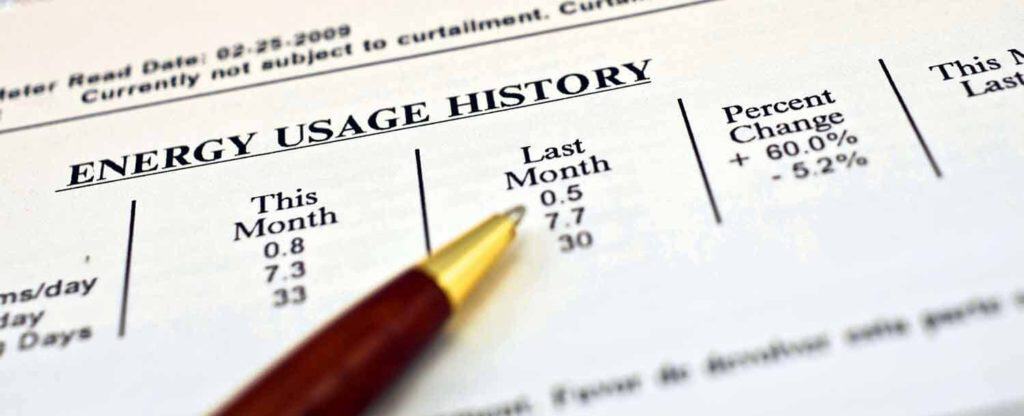
If you don’t have access to the previous usage history for your new home, you can estimate your electricity usage. You can also ask the last landlord for a copy of their 12-month kWh usage history.
Tips to maximize savings this winter
Aside from finding the perfect energy plan, several other tips can help you maximize your energy savings this winter.
First, familiarize yourself with the different types of energy plans and rates available. There are fixed-rate, variable-rate, and prepaid plans, each with advantages and disadvantages.
Conserving energy and reducing usage during winter are other ways to lower energy bills. Simple changes, such as lowering your thermostat, sealing drafty windows, and using energy-efficient lighting, can help you save electricity.
Finally, it’s essential to regularly review and adjust your energy plan to ensure you are always getting the best deal.
Still have questions?
Our Texas-based energy experts are here to help:
Live Chat (bottom right, Mon-Fri: 8:30 AM – 6:30 PM) Call 855-441-3030 (Mon-Fri: 8:30 AM – 6:30 PM Sat: 9 AM – 4:30 PM) Email [email protected]
Any product or company names, marks, or logos shown on this page are the property of their respective owners. Compare Power is an unaffiliated, independent marketplace.Get unbiased, accurate information backed by our commitment to editorial integrity.
Find the Best Fixed Electric Rates
What’s a good fixed rate per kWh in Texas? The lowest fixed-rate electricity plan today starts at 12.30¢/kWh – significantly lower than the Texas average of 16.44 ¢/kWh.
A fixed-rate electricity plan in Texas locks in a set rate per kWh for the duration of your contract, typically 6 to 36 months, providing stability and predictable monthly bills.
Key Takeaways:
Fixed-rate plans offer price stability for the contract duration
These live rates for ONCOR ELECTRIC DELIVERY COMPANY service area were updated on . Pricing shown is based on an exact usage of 1000 kWh.
What are the benefits of fixed-rate electricity plans in Texas?
For Texans tired of volatile electricity bills, fixed-rate plans offer a simple solution – stability. By locking in a set rate for your contract term, you can say goodbye to unpredictable monthly costs and scream-worthy rate hikes.
No more budgeting headaches or bracing for sky-high summer bills. Just consistent, level payments you can plan around.
At its core, a fixed-rate electricity plan is elegant in its simplicity. You pay a locked rate per kWh of usage for the duration of your contract, whether six months, one year, two years, or more. Your rate doesn’t fluctuate with market conditions, utility fuel costs, or seasons.
Does it sound too good to be true? While fixed rates don’t protect you from changes in your usage patterns, they eliminate the chaos of rate volatility.
That stable per-kWh price provides a firm foundation for manageable bills. Just monitor your electricity consumption, and you’ll know roughly what to budget each month.
When you lock in a fixed electricity rate, you put yourself in the driver’s seat and leave uncertainty in the rearview mirror.
But consistent budgeting is just the start of fixed-rate benefits:
Pricing Protection—As wholesale electricity prices fluctuate based on demand, supply costs, and market events, your fixed rate keeps your bill predictable. There are no sudden spikes to swallow.
Flexible Terms—Whether you prefer a short 6-month lock, want to settle in for 24 months, or something in between, fixed-rate options let you choose the contract length that best suits you.
Renewable Options— Who says fixed rates can’t be green? Many providers offer 100% renewable fixed-rate plans utilizing solar, wind, and other clean sources.
Plan Variety— From flat-rate to time-of-use, prepaid to indexed, there’s a fixed-rate plan type to meet almost any need. No compromising for stabilized pricing.
Potential Savings—Locking in when rates are low lets you keep paying a discounted rate as prices potentially rise over your contract. It’s the best of both worlds.
Fixed-rate plans in Texas typically allow you to lock in rates for 6, 12, or 24 months, with some providers offering even longer terms.
In our age of infinite choice, fixed-rate electricity makes life simpler. You get price transparency, predictable bills, and the ability to choose your household’s right plan. All without sacrificing flexibility or green energy options.
Are fixed-rate electricity plans always the cheapest option in Texas?
Here’s the reality—in any given month, some Texans may find lower rates on variable plans that float with the market. And there is no guarantee locking in today’s fixed rate will pay off long-term if wholesale prices tumble.
However, those savings often come with a “certainty tax” – the risk that rates will spike in future months, catching those on variable plans off-guard with a sudden rate hike. Fixed-rate customers can shrug off market fluctuations, knowing their rate is locked.
We always strive to show Texans all their options so they can make an educated choice. Our rate comparison tools let you weigh the best fixed and variable plans based on your home’s historical usage.
That way, you can opt for stabilized pricing or ride the market variability – whichever aligns with your tolerance for rate inconsistency.
If you’re currently on a variable-rate plan, you can usually switch to a fixed-rate plan when your current contract expires or by paying an early termination fee.
The bottom line is that fixed-rate plans offer a premium many Texans are willing to pay: complete peace of mind in exchange for steady, hassle-free bills.
That’s an invaluable benefit when money’s tight, or you don’t want another worry in our fast-paced world.
Who Has the Lowest Fixed Rates in Texas?
With over 60 electric companies peddling hundreds of fixed-rate plans, finding the lowest rate for your home requires some diligence. ComparePower makes it easier.
Search with your zip code and view fixed-rate electricity plans from top Texas providers in your area.
Personalize the results to your home and find plans that offer the best value for your situation.
While it’s difficult to predict, some experts suggest Texas electricity rates may stabilize or slightly decrease in 2024 due to increased renewable energy production. However, it’s always wise to lock in a competitive rate when you find one.
Compare Fixed-Rate Plans
Next Steps: Compare Rates & Save
Sign Up and Save With Live Link™
Say goodbye to guesswork and hello to personalized savings with Live Link™. This innovative feature taps into your actual energy usage data to find the perfect electricity plan for your home. Here’s why Texans love Live Link™:
Effortless Accuracy: No more digging through old bills or estimating your usage. Live Link™ securely pulls your real consumption data with just a click.
Tailored Recommendations: Get plan options customized to your unique energy habits, not generic estimates.
True Cost Clarity: See the full picture of your electricity costs, including how seasonal changes affect your bill.
Big Savings: By matching you with plans that fit your actual usage, Live Link™ could save you hundreds each year.
Ready to find your best plan? Try Live Link™ now – it’s free, fast, and could be your ticket to lower electric bills.
Discover how to compare Texas electricity rates effortlessly. Whether you’re moving to a new home or looking to switch providers, ComparePower is your go-to resource for all things electricity in Texas.
Do you have questions about finding the best fixed-rate electricity plans? We’ve got you covered.
How do fixed-rate electricity plans work in Texas?
Fixed-rate plans in Texas lock in a set rate per kWh for the duration of your contract. This means your electricity rate remains the same regardless of market fluctuations, providing predictable bills based on your usage.
How long can you lock in a fixed-rate electricity plan in Texas?
Most providers offer fixed-rate plans for 6, 12, or 24 months. Some may offer shorter or longer terms, but these are the most common contract lengths.
What should I consider before choosing a fixed-rate electricity plan in Texas?
Consider your usage patterns, the length of time you plan to stay at your current address, the provider’s reputation, and any additional fees or charges. Also, compare rates across multiple providers to ensure you’re getting the best deal.
Will Texas electricity rates go down in 2024?
While it’s challenging to predict with certainty, some experts suggest rates may stabilize or slightly decrease due to increased renewable energy production. However, many factors can influence electricity rates, so it’s wise to lock in a competitive rate when you find one.
Can I switch from a variable-rate to a fixed-rate electricity plan in Texas?
Yes, you can typically switch to a fixed-rate plan when your current contract expires. If you’re in the middle of a contract, you may need to pay an early termination fee to switch. Check with your current provider for specific terms.
What electric company has the lowest fixed rates in Texas?
With over 60 providers and hundreds of plans, finding the lowest rate can be challenging. ComparePower provides an accurate comparison tailored to your home’s usage so you can be confident you’re getting the best fixed rate.
How do I find the cheapest fixed-rate electricity in Texas?
Easily find your cheapest rate on ComparePower using your home’s usage history. Comparing plans with your usage can save you hundreds a year. Quick sign-up and enrollment – switch plans in just 5 minutes.
Still have questions?
Our Texas-based energy experts are here to help:
Live Chat (bottom right, Mon-Fri: 8:30 AM – 6:30 PM) Call 855-441-3030 (Mon-Fri: 8:30 AM – 6:30 PM Sat: 9 AM – 4:30 PM) Email [email protected]
Disclaimer: This tool is for approximation purposes only. Accuracy is not guaranteed
or implied.
The approximated monthly usage is based on an average over 12 months. Air conditioning and heating
costs can vary and often account for up to 50 percent of your home’s energy use during different
seasons.
Factors such as size of your home, weather, construction, heating and cooling equipment type,
insulation, and family living habits will influence your actual usage.
Want a More Accurate Cost Estimate? Try Live Link™
Stop guessing and start saving with Live Link™ – our advanced tool that uses your kWh usage data to find the best electricity plans.
Fetch your home kWh usage instantly (Texas residents only)
Get personalized electricity plan recommendations based on your actual usage
Discover how much you could save with plans tailored to your unique energy needs.
Calculate Your Home’s Electricity Use
This kWh calculator makes estimating your home’s electricity usage easy, whether you live in a small unit or a large house.
How It Works:
Enter a few details:
Home square footage
Number of occupants
Your energy habits (low, average, high usage)
The electricity calculator will provide an approximate monthly kWh usage amount.
This estimate accounts for factors like home size, number of people, and consumption behaviors.
For Larger Homes:
For homes over 2,000 square feet, your electricity use may be higher. As a general reference, here are estimated monthly kWh usage ranges based on home size:
2,500 sq ft – 1,250 to 2,500 kWh
3,000 sq ft – 1,500 to 3,000 kWh
3,500 sq ft – 1,750 to 3,500 kWh
4,000 sq ft – 2,000 to 4,000 kWh
4,500 sq ft – 2,250 to 4,500 kWh
5,000 sq ft – 2,500 to 5,000 kWh
Remember that your actual usage depends on many factors, such as weather, number of occupants, appliances, and more.
Use our kWh calculator for a more customized estimate, and review past bills to understand your unique usage patterns.
How Much Electricity Does a House Use?
Figuring out your electricity usage helps you pick the best energy plan and save money on bills.
How many kWh does a house use every month?
The table below provides estimates based on square footage:
Home Size (Sqft)
Estimated Monthly kWh Usage
1,000
500 – 1,000 kWh
1,500
750 – 1,500 kWh
2,000
1,000 – 2,000 kWh
2,500
1,250 – 2,500 kWh
3,000
1,500 – 3,000 kWh
3,500
1,750 – 3,500 kWh
4,000
2,000 – 4,000 kWh
4,500
2,250 – 4,500 kWh
5,000
2,500 – 5,000 kWh
Remember that these estimates can vary depending on age, insulation, outside temperature, and your consumption habits, significantly determining your energy consumption.
Key Usage Metrics
The average US home uses about 877 kWh/month. In Texas, the average home uses around 1,200 kWh/month. A 1,500-square-foot home may use 750-1,500 kWh/month.
Usage varies widely based on home size, weather, number of appliances, etc.
On ComparePower, you can easily compare electricity plans and rates in your area. You can also compare costs per kWh, contract lengths, fees, and incentives.
Consider fixed versus variable rate plans. Read provider reviews to hear real customer experiences. Find the most cost-effective electricity plan for your needs and usage.
Compare Rates Easily to Save
Using your actual kWh number lets you quickly and easily compare electricity rates. ComparePower lets you see pricing from providers based on your exact usage, ensuring you find the cheapest electricity plan for powering your home with your power to choose.
Learn how to compare rates with your kWh usage in 2-minutes ⤵️
Thank you for helping me find the best price based on how much energy I used in the last 12 months. This saved me a lot of time. We don’t use exactly 1,000 kWh every month, so using that number doesn’t show us the best price. I actually picked the second cheapest because I wanted 100% green energy. Great website, everything was easy to do!
Kristen H. (TX, United States)
New Home? Estimate Your Usage
Are you moving into a new place without past energy bills? Our kWh calculator provides a rough monthly usage estimate based on your home details. This gives you a starting point for picking an electricity plan.
Once you have a full year of usage data, you can reevaluate and switch electricity plans to better suit your needs. Accurate energy consumption information saves money.
Switch Providers and Save
Letting your energy contract expire can be costly, but switching electricity providers is easy.
The new company handles everything, including canceling your old service. The entire switch takes just minutes online, and savings can start immediately in month one.
So don’t wait – see rates in your area now and switch to save.
Compare Rates Near You ⤵️
kWh Electricity Calculator FAQs
How is kWh calculated?
kWh is calculated by multiplying an appliance’s power in kilowatts by the hours you use it. It’s like figuring out how much gas your car uses on a trip. A 2-kilowatt air conditioner running for 3 hours uses 6 kWh. This simple math helps you understand your energy use.
How to calculate kWh?
To calculate kWh, multiply your device’s power (in kilowatts) by how long you use it. Do you have watts? Just divide by 1000 first. So, a 100-watt bulb (0.1 kW) for 10 hours uses 1 kWh. It’s an easy way to monitor your electricity consumption.
How to calculate kWh cost?
Calculating kWh cost is like totaling a grocery bill. Multiply the kWh you’ve used by your electricity rate. If you used 500 kWh at 12 cents per kWh, you’re looking at $60. This simple calculation helps you understand and manage your energy spending.
How to calculate kWh per day?
To calculate your daily kWh, add up the energy used by all your appliances in 24 hours. For each device, multiply its power by how long you use it daily. This process is like creating an energy diary for your home, helping you spot where you might be using more power than you realize.
What does kWh mean?
kWh stands for kilowatt-hour. Think of it as the ‘gallon’ of electricity use. It measures how much power you’re using over time. One kWh is the energy a 1000-watt appliance uses in an hour. Understanding kWh helps you make sense of your electricity bill.
How many kWh will I use?
Your kWh use depends on your home size, appliances, and habits. An average Texas home uses about 1,000 kWh monthly. Check your past bills or use an online calculator for a personalized estimate. It’s like predicting how much gas you’ll use on a road trip.
Is 40 kWh a day a lot?
Yes, 40 kWh a day is on the high side – most U.S. households use around 30 kWh daily. But here’s what matters: your usage depends on your situation. Running central air conditioning, having a big house, or using many appliances can increase your daily usage. Track your usage to understand what’s typical for your home.
How much time is 1 kWh of electricity?
1 kWh is like an energy budget that different appliances spend at different rates. It could power a 100-watt light bulb for 10 hours or a 2,000-watt hair dryer for 30 minutes. How long it lasts depends on what you’re powering; just like how far a gallon of gas gets, it depends on your car.
How to calculate kWh from watts?
To calculate kWh from watts, divide the watts by 1000 to get kilowatts. Then multiply by the hours used. A 60-watt bulb used for 5 hours? That’s 0.3 kWh: (60 ÷ 1000) × 5 = 0.3 kWh. It’s a handy skill for understanding your energy use.
How much kWh does a house use?
The average residential electricity consumption in the United States is about 10,715 kWh per year, which translates to approximately 893 kWh per month, according to U.S. Energy Information Administration (EIA) data.
According to the U.S. Energy Information Administration (EIA), the average annual electricity consumption for a Texas residential utility customer is about 14,112 kWh per year. This translates to approximately 1,176 kWh per month.
What does 1 kWh mean?
Let’s break down a kilowatt-hour (kWh): it’s how we measure your electricity use. One kWh equals 1,000 watts of power used for one hour. Here’s a real example: if you keep a 100-watt light bulb on for 10 hours, you’ve used 1 kWh of electricity. Understanding kWh helps you track your actual power usage and avoid overpaying.
Is 2000 kWh per month a lot?
Straight talk: 2,000 kWh per month is definitely above average. Most U.S. households use between 900-1,100 kWh monthly. You might hit 2,000 kWh if you have a larger home or run the AC full blast during a Texas summer. Understanding your usage pattern is key to finding the right electricity plan.
How many kWh is 1 unit?
Simple answer: 1 unit equals 1 kWh. So when your bill shows 300 units, that’s 300 kilowatt-hours of electricity. Knowing this helps you understand precisely how much power you use and pay for. Don’t let confusing terms keep you from finding the best electricity rate.
Still have questions?
Our Texas-based energy experts are here to help:
Live Chat (bottom right, Mon-Fri: 8:30 AM – 6:30 PM) Call 855-441-3030 (Mon-Fri: 8:30 AM – 6:30 PM Sat: 9 AM – 4:30 PM) Email [email protected]
Any product or company names, marks, or logos shown on this page are the property of their respective owners. ComparePower is an unaffiliated, independent marketplace. Get unbiased, accurate information backed by our commitment to editorial integrity.
Any product or company names, marks, or logos shown on this page are the property of their respective owners. ComparePower is an unaffiliated, independent marketplace. Get unbiased, accurate information backed by our commitment to editorial integrity.
Ever looked at your electricity bill and wondered what a kWh is and why they cost so much?
You’re not alone. We’re here to shed some light on your power costs and help you understand what’s driving your energy consumption.
And we’ll show you how to use this knowledge to find the best electricity plans for your needs.
TL;DR: In Texas, the average monthly kWh usage is higher than the national average due to factors like climate and home size. Understanding your kWh usage is key to managing your electricity costs.
Understanding kWh and Your Power Costs
Your kilowatt-hour (kWh) usage directly impacts your electricity bill. The more kWh you use, the higher your bill.
But here’s the good news: by understanding your kWh usage, you can take steps to reduce it and save money on your power costs. Plus, reducing your usage is good for the environment, too.
What is a kWh?
A kWh is a unit of energy that electricity companies use to measure your power usage.
Think of it like the miles on your car’s odometer, but instead of tracking how far you’ve driven, it tracks how much electricity you’ve used.
It’s the standard unit of measurement for electricity, and it’s what you’ll see on your electricity bill each month.
How many kWh is normal?
In Texas, the average monthly kWh usage is about 1,176.
But what does that mean for you? If your monthly usage is around 500 kWh, you’re using less than half the average.
You’re using nearly double if it’s around 2000 kWh per month. Understanding your usage can help you make sense of your electricity bill and identify ways to save.
How to Reduce Your kWh Usage
Reducing your kWh usage isn’t just about turning off lights. It’s about making your home more energy-efficient.
This could mean upgrading to energy-efficient appliances, improving your home’s insulation, or even changing your habits, like unplugging devices when they’re not in use.
Seasonal Changes and kWh Usage
Your kWh usage can also vary by season. In Texas, you might use more electricity in the summer to power your air conditioning and less in the winter.
Understanding these seasonal changes can help you plan for higher electricity bills during certain times of the year.
Calculate Your Monthly kWh Usage
Kilowatt-hours (kWh), usage levels, low-consumption fees – all the industry jargon is enough to make you want to tear your hair out.
You shouldn’t have to be an electrical engineer to know how much you will spend each month on power costs.
Here are a few more statistics to help you calculate your energy consumption:
A 2-ton central air conditioner uses 1450 kWh per month
A typical water heater used by a 4-person household consumes 310 kWh per month
A dishwasher uses 30 kWh per month
An oven range uses 58 kWh per month
A microwave uses 16 kWh per month
A 17-20 cubic foot refrigerator-freezer uses 205 kWh per month
A washing machine uses 9 kWh per month
A dryer uses 75 kWh per month
Lighting for a 4-5 room residence uses 50 kWh per month
A television set uses 27 kWh per month
(The above statistics are all based on average home use)
Not sure where to start?
If you’re moving into a new home or apartment, our kWh calculator can help.
It helps you quickly estimate your usage to shop for electricity smarter. It’s a simple tool, but it can make a big difference in understanding your power costs.
Electricity kWh Calculator Want a More Accurate Cost Estimate? Try Live Link™ Stop guessing and start saving with Live Link™ – our advanced tool that uses your kWh usage data to find the best electricity plans. Discover how much you could save with plans tailored to your unique energy needs. Calculate Your Home’s Electricity Use…
Finding the Best Electricity Rates with ComparePower
In Texas, you have the power to choose your electricity provider. This means you can shop around for the best rates.
But comparing rates from different providers can be time-consuming and confusing. That’s where ComparePower comes in.
How ComparePower Can Help
ComparePower makes finding the best electricity rates easy. We do the hard work for you, comparing rates from different providers all in one place to help you find the best deal.
And we don’t just look at the cost per kWh. We also consider things like contract length and renewable energy options.
Take Control of Your Power Costs
Understanding your average monthly kWh usage is the first step to taking control of your power costs.
With ComparePower, you can find the best electricity rates, reduce your energy consumption, and save money on your power costs.
So why wait? Start comparing rates today and see how much you could save with ComparePower.
Remember, knowledge is power, and in this case, it’s the power to save on your electricity bill.
The usage of 500 kWh per month can depend on the context and the household size, usage, and appliances.
According to the U.S Energy Information Administration, the average monthly electricity consumption for a residential utility customer in the United States is about 914 kWh per month.
So, usage of 500 kWh per month is considered lower than the average. However, it can still be considered high in comparison with the usage of a small apartment or a single person.
It’s important to note that usage can vary depending on the location, season, and energy efficiency of the home.
Is 800 kWh per month a lot?
The usage of 800 kWh per month can depend on the context and on the household size, usage, and appliances.
According to the U.S Energy Information Administration, the average monthly electricity consumption for a residential utility customer in the United States is about 914 kWh per month.
Still have questions?
Our Texas-based energy experts are here to help:
Live Chat (bottom right, Mon-Fri: 8:30 AM – 6:30 PM) Call 855-441-3030 (Mon-Fri: 8:30 AM – 6:30 PM Sat: 9 AM – 4:30 PM) Email [email protected]