



Any product or company names, marks, or logos shown on this page are the property of their respective owners. Compare Power is an unaffiliated, independent marketplace. Get unbiased, accurate information backed by our commitment to editorial integrity.
What Texas Businesses Pay vs. What Gets Advertised
Texas businesses save 35% on electricity compared to the national average. Except 73% of you are paying 15-25% more than you should.
Key Takeaways:
- The advertised per-kWh rate covers only energy charges, but your actual bill has four components, and one single component can add $18,000 to $50,000 annually.
- Demand charges represent 30 to 70 percent of commercial electricity bills, yet most providers never explain them on the initial quote.
- The average Texas business pays 8.60 ¢/kWh cents per kWh all-in, which is 35 percent below the national average, but that advantage disappears without understanding your full rate structure.
The reason isn’t complexity. It’s that most business owners never see the full rate structure. You compare on one metric (cents per kWh) when your bill actually has four components. One single component can add $18,000 to $50,000 annually.
This guide reveals what those components are, where commercial electricity rates in texas hide their true cost, and how to spot the difference between a good quote and one that leaves $5,000 to $15,000 on the table every year. The gap between smart rate shoppers and those stuck on auto-renewal at inflated rates represents hundreds of millions in annual overpayment across Texas businesses.ercial rates, how far in advance to start shopping based on your business size, and the negotiation tactics that drop your rate before you sign anything.
Table of Contents
Current Texas Commercial Electricity Rates
When a competitive retail provider quotes you 6.80¢/kWh, you’re looking at energy charges only. Your actual bill includes three more components that never appear in that headline rate.
Here’s what actually shows up on your monthly invoice. Energy charges (6.80¢/kWh average) cover the kilowatt-hours you consume, measured monthly. Demand charges are calculated on your peak consumption during specific grid stress windows and represent 30 to 70 percent of total cost. They’re the single largest invoice driver for most commercial customers.
TDU delivery charges vary by service territory (Oncor, CenterPoint, TNMP, AEP Central, AEP North, or LP&L) and add 1.5 to 3.5¢/kWh across 12 months. Ancillary charges include transmission, distribution, and system reliability costs that range from 0.5 to 1.5¢/kWh.
All four combined equal your actual all-in rate. The average Texas business pays 8.60 ¢/kWh cents per kWh all-in, which is 35% below the national commercial average of 13.63 ¢/kWh cents per kWh. But that 35% advantage evaporates if you don’t understand which component is driving your bill.
A facility with high demand charges might save only 5% from switching providers because demand (not energy price) is the largest lever. A facility with low demand might save 20% because energy charges dominate.
Request an itemized breakdown before comparing any quotes. Ask your current provider or prospective providers to split the rate into energy (per kWh), demand (per kW), and TDU delivery. If they won’t break it down, that’s a major red flag. Opacity in billing structure indicates they’re hiding cost drivers intentionally.
The best providers publish transparent pricing with all four components separated. Our rate audits reveal exactly this breakdown so you can see which component offers the real savings opportunity.
Demand Charges and the 30-70% Cost Component
You’ve scrutinized every cent per kilowatt-hour advertised. Demand charges are what really move your bill. They represent 30 to 70 percent of total annual cost, yet 78% of Texas business owners don’t know how they’re calculated or how to reduce them.
Most facilities treat demand as inevitable. It’s not. It’s the most controllable component on your bill.
Demand charges aren’t based on total monthly consumption. They’re based on your peak demand during a specific 15-minute window. ERCOT (Electric Reliability Council of Texas) designates four summer hours (June through September) as the grid’s highest-stress periods. Your facility’s peak consumption during any of those four windows determines your annual demand charge, applied across all 12 months.
It’s the difference between your average consumption and your worst-case peak. This 4CP method means your single worst hour in summer essentially determines your annual billing rate.
For a facility with 500 kW peak demand during a 4CP window, the math looks like this: 500 kW multiplied by $40 per kW per month (average rate) multiplied by 12 months equals $240,000 annually. That single metric drives a quarter of the total bill for many facilities. For a 5 MW data center, demand charges alone could exceed $225,000 per year.
These aren’t hypothetical numbers. They’re real expenses that appear on invoices month after month.
But here’s the opportunity. Demand charges are the only component you can directly control. If you reduce your 4CP peak by 35% through load shifting, pre-cooling HVAC systems, staggering equipment starts, or enrolling in demand response programs, your annual demand charges drop 35% immediately.
For the 500 kW facility, that’s $84,000 in annual savings from a single operational change. Manufacturing facilities, hospitals, and data centers have achieved documented 20-50% demand reductions, which slash costs dramatically through strategic load management.
Load shifting works best for manufacturing, hospitals, data centers, and facilities with controllable loads. Pre-cool HVAC systems 30 minutes before the peak demand window (typically 4 to 6 p.m. on hot summer days). Delay non-essential equipment startup until after the peak interval. Enroll in demand response programs that pay you directly for reducing load during grid stress.
Some providers pay $1,000 to $5,000 per curtailment event, creating revenue opportunities. Automated controls typically pay for themselves in 8-12 months when demand savings are calculated.
The financial case is clear for large facilities. A 500 kW facility achieving 35% demand reduction saves $84,000 annually. Many hospitals and manufacturing plants exceed 50% reductions through automated systems. This turns a cost center into a profit opportunity.
For retail, offices, and smaller operations with consistent loads, demand management requires capital investment (automated controls, battery storage) that may not pencil out immediately. In these cases, focus on selecting the right demand rate plan and ensuring you’re classified in the correct rate category.
A 24-month billing audit often reveals you’re on the wrong rate code, which costs 7-12% annually without offering any demand reduction opportunity.
TDU Territory Rates and Plan Types
Two identical 50 kW offices in Houston face a 10-15% rate difference based on a single factor: which transmission and distribution utility owns the poles delivering power to each building. You cannot choose your TDU. It’s assigned by location.
But grasping how TDU rates work is critical for accurate budgeting and comparison shopping. TDU rates are one of the least understood but highest-impact components of commercial electricity costs.
Texas has six major TDU territories: Oncor (covers North and Central Texas), CenterPoint (Houston metro area and surrounding regions), TNMP (East and Northeast Texas), AEP Central (South and Central Texas), AEP North (Panhandle and parts of North Texas), and Lubbock Power & Light (West Texas). Each TDU sets distinct rate schedules and delivery charges. Oncor might add 2.8¢/kWh to your bill; CenterPoint might add 3.2¢/kWh for identical service. The difference is pure geography, but it’s permanent for the life of your facility.
TDU rates reset twice yearly on March 1 and September 1. PUCT (Public Utility Commission of Texas) announces rate changes 45 days in advance. If your contract renewal falls between January 16 and February 28, you lock in pre-March rates for the duration of your contract. If you renew March 2, you’re stuck with the new (usually higher) rates.
This timing advantage can mean $1,500 to $3,000 in savings on a three-year contract by strategically renewing before rate resets. It’s purely a matter of calendar timing.
Plan types add another layer. Fixed-rate plans lock your energy cost for the entire contract term, protecting you from wholesale price volatility. Variable-rate plans reset monthly based on wholesale prices, offering upside in falling markets but risk in rising markets. Block-and-index plans include a fixed baseline with variable adjustments for wholesale movement.
Time-of-use plans charge different rates for peak, shoulder, and off-peak hours. Your facility’s load factor (how evenly you consume power across 24 hours) determines which plan saves the most.
A facility with high load factor (consistent usage throughout the day) benefits from fixed-rate plans because your consumption is predictable. A facility with concentrated peak usage benefits from time-of-use plans because you can shift consumption to cheaper off-peak hours.
Calculate your load factor: monthly kWh divided by (peak kW multiplied by days multiplied by 24 hours). If the result exceeds 0.65, fixed-rate typically wins. Below 0.50, time-of-use usually offers better savings. This single calculation reveals which plan type you should prioritize in your RFP.
Hidden Fees, Contract Traps, and Seasonal Timing
Three distinct decisions determine whether you save $5,000 or leave $15,000 on the table: which fees you agree to, when you lock in, and how you handle contract renewals. All three hide in contracts until you’re already signed.
These represent the difference between a zero-commitment quote that becomes a binding obligation and a strategic renewal that minimizes cost.
Auto-renewal clauses are the first trap. After your contract expires, default behavior rolls you to variable rates at 5 to 7 percent premium above fixed rates unless you explicitly opt-out 30 to 60 days before expiration. Some providers send opt-out notices via email (easily archived and forgotten). Result: you continue at 15 to 20 percent above competitive rates for another month until you notice.
For a $5,000 monthly bill, that’s $750 to $1,000 in overpayment per month. Many facility managers have discovered this trap only after three months of overpayment.
Fix this with three concrete steps. Calendar your contract expiration date 90 days before arrival. Request written confirmation of non-renewal 45 days before expiration. Provide signed notice of intent not to renew 30 days before the end.
Put everything in writing every time. Don’t rely on phone calls or verbal agreements. Email is acceptable but creates a paper trail.
Escalation clauses are the second trap. Your rate increases 2 to 3 percent annually, or increases if wholesale prices exceed a threshold. A 3 percent annual escalation on a $500 monthly bill compounds to an extra $180 by year three, and $3,000 cumulative over five years. These clauses exist because providers can’t forecast wholesale costs accurately.
Always push for fixed rates with zero escalation. If escalation is non-negotiable, cap it at 2 percent annual or tie it to CPI only (which averaged 2.8% historically). This single negotiation point can save thousands.
Early termination fees are the third trap, ranging from $500 to $5,000-plus, calculated as remaining contract months multiplied by average monthly bill multiplied by penalty percentage. A facility with a $5,000 monthly bill on a three-year contract might face $15,000 to $25,000 in penalties if they exit after year one.
Ask directly before signing: “What’s the exact early termination fee?” Make them quote a number, then negotiate lower. Common negotiating angle: “I’ll sign three years at this rate if you cap the ETF at $2,000 and reduce the contract term to two years instead.”
Seasonal timing is your fourth lever. Spring (March through May) and fall (September through November) offer the lowest commercial electricity rates, typically 15 to 25 percent cheaper than summer. Summer rates in Texas reach 15 to 20 cents per kWh during peak air conditioning season when cooling demand is maximum. Winter fluctuates between 11 to 16 cents.
If your contract renews July or August, demand charges are priced against historically high forecasts because summer peak season is imminent. Renew October through May when demand forecasts are lower and REP quotes assume lower transmission costs. Seasonal timing is a free 10 to 15 percent savings lever if you act with 60 days’ notice.
Rate Benchmarking by Business Size
Your business size (peak kW demand rating) determines not just your energy charges. It fundamentally changes which plan types are available, how demand charges affect you, and what you should realistically expect to pay. Business size is a critical variable that separates realistic expectations from bad quotes.
Small businesses (under 25 kW peak demand) face minimal demand charges. The monthly base charge and energy cost dominate. Typical all-in rates: 9.5 to 11.5¢/kWh. These facilities rarely see demand management opportunities because their load is too small to shift profitably.
The best savings lever is simple: shop for the lowest energy rate and lock it in before TDU rate increases hit. Volume discounts don’t apply until you exceed 10 to 25 MW total consumption across multiple locations. For small businesses, a zero-commitment quote process helps you explore options without binding yourself to long terms.
Medium businesses (25 to 200 kW peak) hit the sweet spot for demand management and operational optimization. Demand charges begin to represent 30 to 50 percent of total cost. Time-of-use or demand response programs become profitable. Installing automated load management (HVAC pre-cooling, staggered machinery startup) typically pays back in 8 to 12 months.
Typical all-in rates: 8.5 to 10.5¢/kWh. Compare fixed-rate and time-of-use plans side-by-side by providing your 24-month billing history to competing providers. Most medium businesses discover 15-25% combined savings through this process.
Large businesses (200 kW to 5 MW peak) have demand charges representing 50 to 70 percent of total cost. Demand management is no longer optional. It’s essential. Capital investment in load control systems becomes necessary. Aggregating multi-location consumption opens 6 to 12 percent volume discounts.
Dedicated account management from your REP becomes standard. Typical all-in rates: 7.5 to 9.5¢/kWh. Negotiate shorter contract terms (two to three years) to maintain flexibility as demand management investments reduce peak demand.
Enterprise and data center operations (5 MW-plus) operate under completely different terms. Demand charges can exceed energy charges. Wholesale power sourcing, PPA (power acquisition agreements) for renewable capacity, and on-site generation become viable. Typical all-in rates: 6.5 to 8.5¢/kWh (or custom PPAs).
These facilities work directly with REPs and rarely use standard rate quotes. If you’re in this tier, engage a power procurement specialist before renewing. Market intelligence at this scale becomes a competitive advantage.
Know your facility’s peak kW demand and 24-month average consumption before requesting quotes. This baseline tells you which tier of rates you should be comparing against and which fixed vs. variable plan types are actually worth evaluating. Without this baseline, you’ll compare apples to oranges.
ERCOT Wholesale Prices, Renewable Alternatives
Wholesale electricity prices in ERCOT are forecast to increase 45% in 2026 after rising 21% in 2025. Forward contracts for 2025 through 2028 are trading above $50 per MWh, with summer peak months reaching $110 to $165 per MWh in some trading hubs. Knowing what’s driving these increases helps you time your renewal strategically and choose between fixed-rate protection and variable-rate risk.
Five factors drive wholesale prices directly. Demand grows with population (Texas adds 2% annually) and data center buildout (20% annual load growth in some regions). Texas data centers and cryptocurrency mining now contribute 66% of U.S. electricity sales growth.
Supply fluctuates by hour based on renewable generation from wind and solar. Natural gas prices influence generation costs since 70% of ERCOT supply is gas-fired. Transmission constraints in specific zones (Austin to Dallas, Houston to North Texas) create local price spikes. Reserve margin tightness determines system-wide pricing power. When ERCOT reserve margin falls below 13%, prices spike significantly.
The 45% forecast increase for 2026 reflects hotter summer expectations based on recent climate patterns, continued data center demand, natural gas prices rising to $4 per MMBtu average, and transmission constraints that persist year to year. Battery storage (ramping from 5 GW in 2024 to 15 GW by 2028) will eventually help, but demand growth is outpacing storage deployment.
Renewable generation (wind 36% of supply, solar now 4% and doubling annually) creates a “duck curve” challenge. Low midday prices result from solar output, but tighter evening peaks occur when solar drops off and cooling demand peaks.
Your RFP strategy should account for this volatility explicitly. Fixed-rate REPs lock in high forecasts now to protect against further increases. Variable-rate REPs are risky in 2026. If renewing between January and March 2026, expect fixed-rate quotes 8 to 12 percent higher than 2025 baseline.
If you can defer renewal to October through December 2026, quotes will likely reflect lower summer forecasts and come in 5 to 8 percent lower. Real-time rates and market data tracking become essential for timing decisions. Timing becomes a multi-thousand-dollar decision at this scale.
Renewable alternatives (solar, wind RECs, green tariffs) now cover approximately 30% of ERCOT supply on peak days. Green plans run 8 to 18 percent premium above fossil fuel rates. Federal tax credits (Section 45 for generation tax credit, Section 48 for investment tax credit) reduce the net premium to 4 to 10% if you qualify. For a $3,000 monthly bill, green premium becomes $120 to $300 monthly rather than $240 to $540.
Green makes financial sense if you have sustainability marketing goals, supply chain customer requirements, or tax credit eligibility. Otherwise, premium environmental strategies may not pencil out on ROI basis.
Provider Comparison and Rate Audits
Texas has 139 active retail electric providers competing for your business. The difference between quote #1 and quote #5 is often $2,000 to $8,000 annually. Most businesses shop once and accept the first competitive bid. That single decision leaves half the potential savings on the table.
A detailed side-by-side comparison reveals variances that aren’t immediately obvious.
Start by recognizing the two provider tiers strategically. Twenty-seven providers compete on service quality, billing transparency, contract flexibility, and demand response support. One hundred twelve compete on price alone. If you need billing clarity, responsive customer service, and contract flexibility, you’ll pay a premium (5 to 8% higher rates).
If you only care about the lowest all-in rate and can tolerate opaque billing and slow customer service, commodity providers offer 3 to 6% discounts. The choice reflects your operational priorities.
Evaluate the 27 quality-focused providers first with detailed criteria. Check third-party ratings on SolarReviews and Google Business. Can you access 15-minute interval billing data through their portal? Are demand charges itemized separately or bundled into an opaque blended rate?
Do they explain TDU rate changes in advance, or do you discover them on your bill after the fact? What’s their response time to billing disputes? Is it under 24 hours or two weeks? Do you get a dedicated account manager or a ticket number in a queue?
These operational factors determine whether you’re resolving billing issues or frustrating your team.
For multi-location portfolios, demand aggregation tools matter. Can the provider combine consumption across five locations into a single contract with volume discounts applied? Do they offer consolidated billing and a single renewal date? Or do they require separate contracts per site?
Aggregation typically opens 6 to 10 percent additional savings on top of the base rate discount. This is not a minor detail for chains or distributed operations.
After filtering to 5 to 7 providers, request RFPs with 24-month billing history. The highest-quality providers will analyze your load factor, identify demand reduction opportunities, and itemize potential savings by component (energy, demand, TDU optimization) across different cities and regions. The commodity providers will return a single all-in rate with no analysis. This response quality tells you everything about their commitment level.
Compare apples to apples rigorously. Identical contract length, identical TDU territory, identical rate structure. Don’t compare a three-year fixed to a two-year variable to a five-year escalating. That’s how commodity providers win bids by shifting baseline assumptions to look cheaper on the surface.
A real rate audit flags these differences and calculates true apples-to-apples cost comparison across all quotes.
A professional rate audit digs deeper strategically. It verifies your current TDU rate code is correct (7 to 12% savings opportunity if wrong). It flags unused demand response programs you’re eligible for. It identifies seasonal timing windows for your renewal.
It flags contract auto-renewal traps and escalation clauses. Power to Choose (the free state tool) is a price list. A rate audit is strategy. ComparePower rate audits reveal market intelligence most providers don’t discuss.
Your Commercial Electricity Rate Audit Checklist
You now understand six levers that control your electricity cost. Here’s your 30-day action plan for revealing your real savings opportunity.
Week 1: Gather intelligence and establish baseline. Request your last 24 months of billing history from your current provider. Calculate your peak kW demand from historical invoices. Identify your TDU territory and look up the next official rate reset date (March 1 or September 1). Check your contract expiration date and review any escalation clauses or early termination fees.
This baseline is essential for comparing quotes accurately.
Week 2: Verify your rate code and demand response eligibility. Cross-reference your TDU rate code against PUCT published schedules for your territory. Verify your 4CP interval assignments on ERCOT’s public list. Confirm whether you’re enrolled in demand response programs (you should be if eligible). Call your TDU directly if anything looks inconsistent.
This verification often uncovers $3,000 to $8,000 in annual savings opportunities.
Week 3: Request competitive quotes from multiple providers. Provide the same 24-month history to 5 to 7 competing providers. Ask them to itemize energy, demand, and TDU delivery charges separately. Request analysis of your load factor and demand reduction opportunities. Compare quote terms on equal contract length, rate structure, and early termination fees.
Request a side-by-side comparison that reveals real cost differences. Transparent pricing should be non-negotiable.
Week 4: Make the switch with written documentation. If your current contract expires within 60 days, you should have selected your new provider by now. If your expiration is 60+ days out, use this time to negotiate terms before submitting your RFP. Lock in your renewal 30 days before expiration. Request written confirmation from the new provider documenting your contract start date and all terms.
Document all contract terms in writing.
Most Texas businesses save $12,000 to $18,000 annually when they audit properly. Your audit likely reveals 25 to 40 percent combined savings opportunity. These aren’t theoretical savings. They’re real dollars hitting your bottom line monthly.
Don’t leave them on the table.

The Texas business average electricity rate is 8.60 ¢/kWh, 36.9 % less than the U.S. average.
Source: eia.gov
“Easy, simple, best rates, just a click away.”
~ Stephen H. (TX, United States)
Business Electricity Contract FAQ
What Is the difference between energy charges and demand charges?
Energy charges (measured in cents per kWh) are what you pay for total consumption. Demand charges (measured in dollars per kW per month) are what you pay for peak consumption during specific grid stress windows. Energy charges reward efficient usage. Demand charges penalize peak consumption regardless of total use.
A facility consuming 100,000 kWh with a 50 kW peak pays different demand charges than a facility consuming 100,000 kWh with a 200 kW peak, even though energy consumption is identical. This distinction drives everything about commercial electricity costs.
Why does my TDU matter if I can choose my REP?
Your REP controls only energy costs. Your TDU controls delivery charges (30-50% of total bill), sets the rate schedule structure, and determines which demand response programs are available. You cannot change TDUs. You cannot negotiate TDU rates (they’re regulated by PUCT).
But knowing your TDU territory’s rate reset dates lets you time your REP renewal strategically to capture favorable pricing windows. TDU timing awareness can save thousands on a three-year contract.
When should I renew my contract to get the best rates?
Begin shopping 45 to 60 days before expiration. If your expiration falls January 16 through February 28, accelerate your switch to lock in pre-March TDU rates. If expiration is July through August, consider delaying slightly to lock in post-September-1 TDU reset rates. PUCT publishes TDU rate changes 45 days in advance.
Use this information to negotiate timing advantages with your REP. Never let auto-renewal pull you into variable rates while you decide.
What is a rate audit and why do I need one?
A rate audit is a forensic review of your TDU rate code, consumption patterns, 4CP interval assignments, contract terms, and demand response eligibility. It identifies four key gaps: wrong rate code classification (7-12% savings), unused demand response programs, seasonal timing windows, and renewal timing before auto-escalation. Most businesses audit once every 3-4 years. If you’ve never audited, you’re likely overpaying by 25-40 percent combined opportunity cost. A professional audit uncovers specific dollar amounts
How much can I realistically save by switching providers?
Switching providers alone typically saves 8-15 percent. Add rate code corrections (7-12%), demand management (10-20%), and optimal timing (5-10%). Combined savings for businesses never audited: 25-40 percent total. ComparePower customer average: $12,000 to $18,000 annually across multi-location portfolios.
What hidden fees should I watch for in contracts?
Four major traps: auto-renewal clauses without 30-60 day notice, escalation clauses (2-3 percent annual increases), early termination fees ($500-$5,000-plus), and demand response auto-enrollment without explicit notification. Always request a one-page terms summary before signing. Cap escalation at 2 percent annual or CPI. Negotiate early termination fees down to 1-3 months of usage.
Can I switch providers mid-contract without penalties?
Only if you accept an early termination fee. ETF fees range from $500 to $5,000-plus, calculated as remaining months multiplied by average bill multiplied by penalty percentage. It is rarely worthwhile unless savings exceed the fee by a substantial margin. Once your contract expires and rolls to month-to-month holdover, you can switch without any ETF. Use the contract expiration window strategically to lock in better rates before auto-renewal activates.
Is renewable energy affordable in Texas right now?
Green plans run 8-18 percent premium currently. Federal tax credits (Section 45, Section 48) reduce net premium to 4-10 percent if you qualify. For a $3,000 monthly bill, green costs $120-$300 extra monthly after credits. It makes sense if you have sustainability goals, customer requirements, or tax credit eligibility.
Otherwise, premium environmental strategies may not deliver positive ROI on pure cost basis.
What Is the best time of year to renew based on seasonal rates?
Spring (March-May) and fall (September-November) offer 15-25 percent cheaper rates than summer months. Demand charges are priced lower because forecasted peak demand is lower outside cooling season. If your contract renews October-May, you capture this seasonal advantage automatically. If it renews June-August, request a delay until October if possible.
How do I aggregate consumption across multiple locations for volume discounts?
Request multi-location contracts that combine consumption across all sites into a single RFP. Typical volume discounts: 6-12 percent depending on combined kW consumption total. Prefer providers with multi-location dashboards and consolidated billing. Avoid providers requiring separate per-site contracts.
Multi-location contracts also surface rate code inconsistencies (Location A on wrong schedule versus Location B) that individual contracts hide completely. Aggregation typically yields 6-12 percent additional savings on top of base rate discounts. ComparePower specializes in multi-site aggregation analysis.
Our Texas-based energy experts are here to help.
Live Chat (bottom right, Mon-Fri: 8 AM – 6 PM)
Call 469-813-8854 (Mon-Fri: 8 AM – 6 PM)
Email [email protected]

How to Switch Business Electricity in Texas
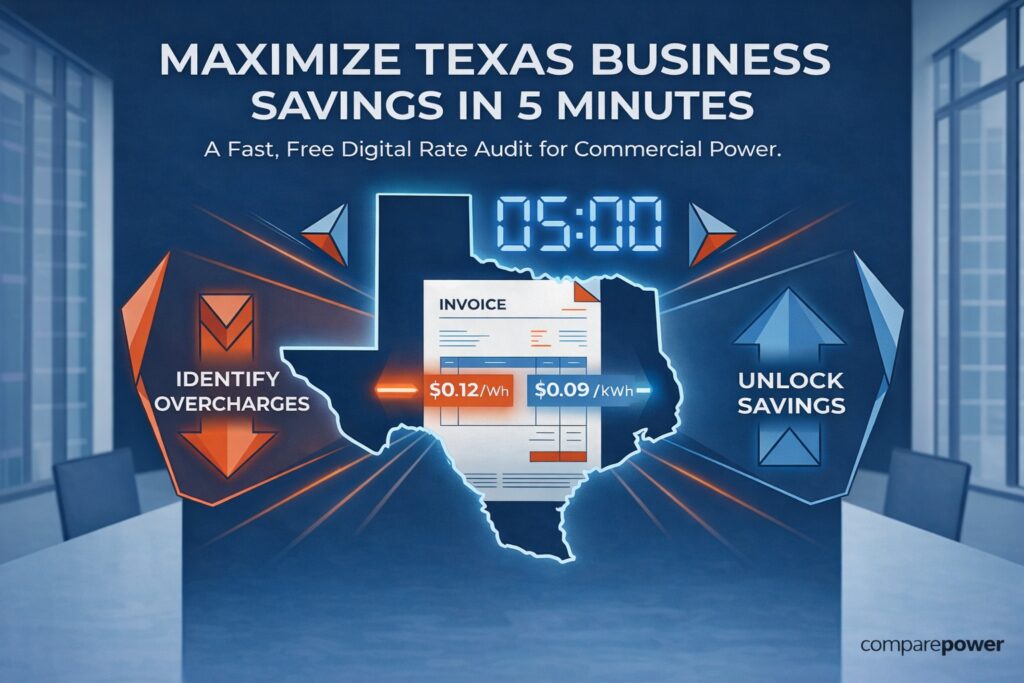
Audit Your Business Electricity Rate

Fixed vs Variable Electricity Rates for Business
What Is a Good kWh Rate for a Business in Texas?

How Long It Takes to Switch Business Electricity

How To Read Business Electricity Bill
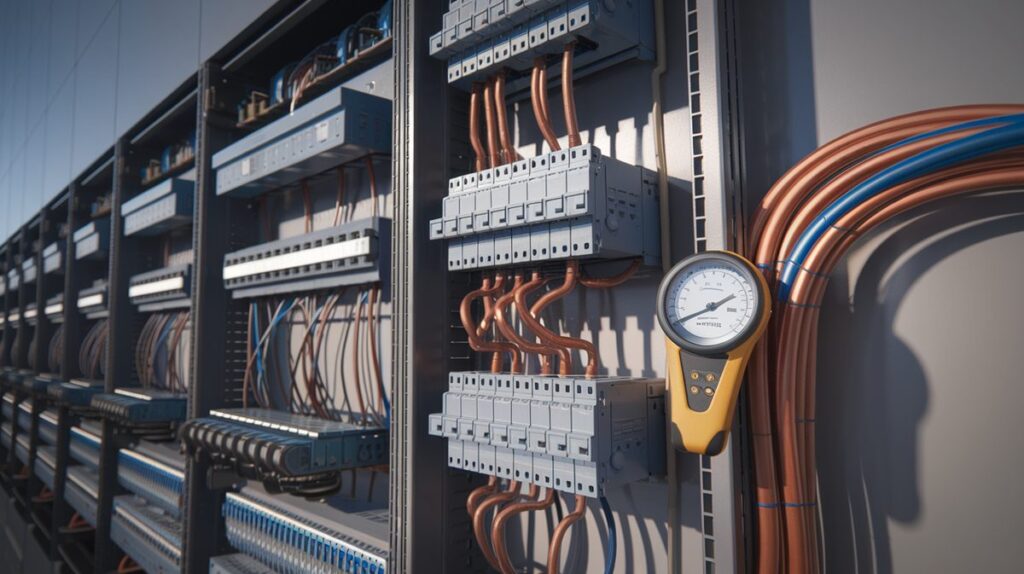
Businesses Electricity Demand Charges

Business Electricity Contract Guide for Texas

Best Time to Renew Your Business Electricity in Texas

Commercial Electricity Rates Texas

How to Start Business Electricity Service in Texas

Restaurant Electricity Rates Texas