



Any product or company names, marks, or logos shown on this page are the property of their respective owners. Compare Power is an unaffiliated, independent marketplace. Get unbiased, accurate information backed by our commitment to editorial integrity.
The Gap Between What You Charge Drivers and What You Pay the Grid
Public EV charging stations charge drivers 30 to 50 cents/kWh. Your commercial EV charging station electricity rate from your retail provider is 5 to 9 cents/kWh. That spread is the entire business case for installing chargers at your Texas commercial property. But the electricity cost that shows up on your bill after installation rarely matches the rate on your current plan, because EV chargers create demand spikes that trigger charges most business owners never anticipated.
Key Takeaways:
- EV chargers create demand spikes that trigger charges most businesses never anticipate, often doubling or tripling the effective cost per kWh beyond your current rate.
- The 30C federal tax credit covers up to $100,000 per charging port, but eligibility depends on location in a qualifying census tract and prevailing wage compliance.
- The gap between what you charge drivers (30 to 50 cents per kWh) and what you pay the grid depends entirely on managing demand charges, not your energy rate.
The charger hardware gets all the attention in every proposal. The electricity cost gets a footnote, if it gets mentioned at all. Here is how commercial EV charging actually affects your electricity bill, what demand charges do to the math, and whether the 30C tax credit changes the calculus for your specific situation. end, you’ll know exactly what to focus on first.o-renewal at inflated rates represents hundreds of millions in annual overpayment across Texas businesses.ercial rates, how far in advance to start shopping based on your business size, and the negotiation tactics that drop your rate before you sign anything.
Table of Contents
The Real Electricity Cost of Running Commercial EV Chargers
A Level 2 commercial EV charger draws 7 to 19 kW per port. A DC fast charger (Level 3) draws 50 to 350 kW per port. The electricity those chargers consume shows up on your commercial bill at whatever energy rate you are currently paying, typically 5 to 9 cents/kWh for Texas commercial accounts.
At the surface, the math looks simple. A Level 2 charger running 8 hours per day at 7.2 kW consumes roughly 1,728 kWh/month per port. At 7 cents/kWh energy-only, that is $121/month in electricity. If you charge drivers 25 cents/kWh, you collect $432/month in revenue from that same usage. The margin looks generous.
But that calculation ignores the second line item: demand charges. A single Level 2 charger adding 7.2 kW to your peak does not move the needle much. Four Level 2 chargers pulling simultaneously add 28.8 kW. If your building already peaks at 60 kW, those chargers push your peak to 88.8 kW. At $5 to $8/kW in demand charges from your TDU, that 28.8 kW increase adds $144 to $230 to your monthly bill before you account for a single kWh of energy.
DC fast chargers amplify this problem dramatically. A single 150 kW DC fast charger can double or triple the peak demand of a mid-size commercial building. The demand charge from one 15-minute charging session, even if it only happens once per month, sets your demand charge for the entire billing period.
The electricity cost of commercial EV charging is not just the per-kWh energy rate. It is the energy rate plus the demand charge impact, and the demand charge can exceed the energy cost for fast charging installations.
A Houston property management company installed four Level 2 chargers at an office complex and budgeted $500/month for electricity. The actual cost was $1,140/month once demand charges hit the bill. Their charger revenue was $780/month. The project that was supposed to generate $280/month in profit was losing $360/month because nobody modeled the demand charge impact before installation.
Level 2 vs. Level 3 and How Charger Type Determines Your Electricity Cost Structure
Level 2 and Level 3 chargers create fundamentally different cost profiles on your commercial electricity bill. The choice between them affects your electricity costs more than your choice of electricity provider.
Level 2 chargers (208/240V, 7 to 19 kW per port) add modest, steady load to your building. They charge vehicles over 4 to 8 hours, which spreads the electricity consumption across a longer period. The demand impact is manageable. Four Level 2 ports running simultaneously at 7.2 kW each add about 29 kW to your peak. For a commercial building already pulling 50 to 100 kW, that is a 15 to 30% increase in peak demand.
Level 2 chargers fit businesses where vehicles park for extended periods: office buildings, hotels, apartment complexes with commercial tenants, and retail centers where customers shop for an hour or more. The electricity cost per charge is lower, and the demand charge impact is predictable.
Level 3 DC fast chargers (480V, 50 to 350 kW per port) create an entirely different demand profile. A single 150 kW charger pulling for 30 minutes creates a demand spike that can exceed the peak of the rest of your building combined. Two chargers running simultaneously at 150 kW each add 300 kW to your peak, which at $5 to $8/kW translates to $1,500 to $2,400 in monthly demand charges from that single overlap period.
Level 3 chargers make financial sense at locations with high traffic and short dwell times: highway-adjacent gas stations, convenience stores along major corridors, and dedicated charging stations. But the electricity cost structure requires either a dedicated commercial meter (to separate charger demand from building demand) or a rate plan specifically designed for high-demand intermittent loads.
If you are considering Level 3 chargers, the electricity plan decision is as important as the charger hardware decision. Getting the wrong rate structure can make the entire installation unprofitable from the first month.
The Line Item That Breaks Most EV Charging Business Cases
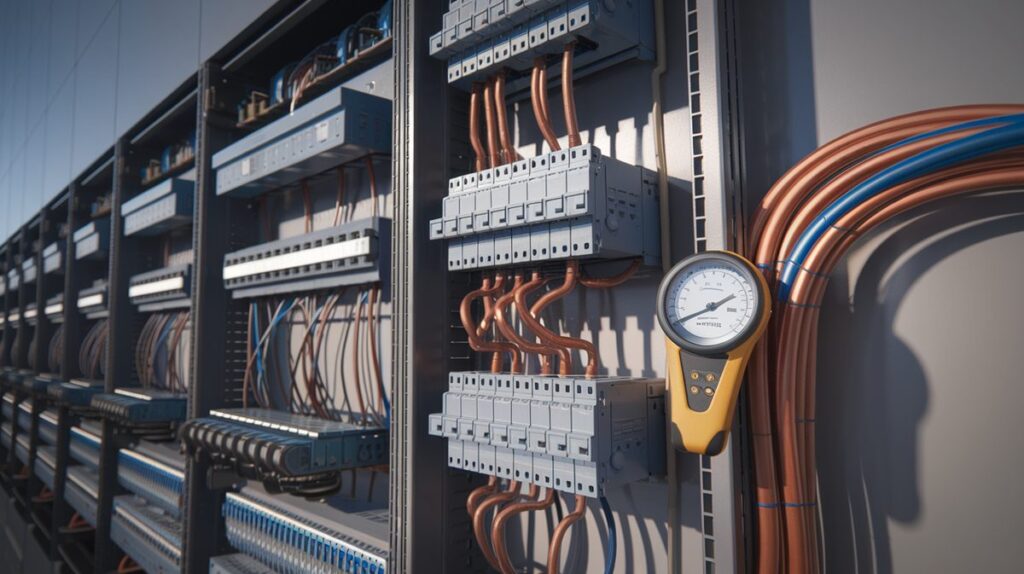
Demand charges are calculated based on your peak kilowatt (kW) draw during any 15-minute interval in the billing period. Your TDU’s smart meter records usage continuously, and the highest 15-minute block becomes your demand reading for the month. That single peak determines a charge of $5 to $8/kW that appears on your bill regardless of total energy consumed.
For businesses without EV chargers, demand charges typically represent 10 to 15% of the total electricity bill. Add commercial EV charging equipment, and that percentage can jump to 25 to 40% of the total bill.
The demand charge problem is worst during the 2 to 3 PM peak on hot summer days, when building HVAC runs at maximum and EV chargers are also active. If your building’s HVAC peaks at 80 kW and two Level 2 chargers add 14.4 kW at the same time, your demand reading is 94.4 kW. That 14.4 kW addition costs $72 to $115/month in demand charges alone, on top of the energy consumed.
Three strategies reduce the demand charge impact of EV chargers.
Load management software limits charger output when building demand approaches a preset threshold. If your building peaks at 80 kW without chargers, you can set the management system to throttle chargers when total building load exceeds 85 kW. This caps demand charges while still providing charging, just at slower speeds during peak periods. ChargePoint, JuiceBox Pro, and most commercial-grade EVSE include load management as a standard feature or paid add-on.
Time-of-use scheduling restricts charging to off-peak hours when building demand is naturally lower. Overnight charging at an office building, where HVAC and lighting are minimal, adds charger load without pushing the demand peak higher. This works best for employee vehicles that park for 8+ hours and fleet vehicles that charge overnight.
A dedicated meter for EV chargers separates charger demand from building demand entirely. This requires coordination with your TDU (Oncor, CenterPoint, AEP Texas, or TNMP) and may involve a separate commercial account, but it prevents charger spikes from inflating demand charges on your primary building meter. The cost of a new meter connection varies by TDU and location, typically $2,000 to $8,000.
The 30C Tax Credit Worth Up to $100,000 Per Port (With Conditions)
The federal 30C Alternative Fuel Vehicle Refueling Property Credit currently offers up to $100,000 per charging port for commercial installations. This credit applies to the cost of the charger hardware, installation, and related infrastructure. It does not apply to ongoing electricity costs.
The 30C credit covers 30% of qualified costs, up to the $100,000 per-port cap. For a Level 2 installation costing $15,000 per port (charger, electrical work, permitting), the credit is $4,500 per port. For a Level 3 installation at $150,000 per port, the credit caps at $100,000.
The current 30C provisions are available through the end of 2032 for properties that meet prevailing wage and apprenticeship requirements. Without meeting those requirements, the credit drops to 6% of qualified costs. The difference between 30% and 6% on a $150,000 Level 3 installation is $36,000 in foregone tax benefit. If you are considering commercial EV chargers, the prevailing wage requirement is worth meeting.
This credit changes the payback calculation on charger hardware, but it does not change the ongoing electricity cost. A $100,000 credit on a Level 3 charger that generates $1,500/month in demand charges still needs sufficient charging revenue to cover the electricity costs after the tax benefit is captured.
The honest assessment: the 30C credit makes the upfront investment significantly more attractive. It does not fix a bad electricity rate or an unmanaged demand charge problem. The credit helps you buy the equipment. Your electricity plan determines whether operating it is profitable.
How to Structure Your Electricity Plan for EV Charging
Your existing commercial electricity plan was not designed for EV charging loads. Here is how to evaluate whether it can handle them and when you need a different structure.
Check your current demand charges. Pull your last three electricity bills and find the demand (kW) line item. Note your current peak demand and the per-kW rate. Then calculate what happens when you add your planned charger load to that peak. If the added demand charges exceed your projected charging revenue, the plan does not work for EV charging without changes.
Evaluate a dedicated meter. Contact your TDU and ask about installing a separate commercial meter for EV chargers. A dedicated meter puts charger demand on its own account, which prevents charger spikes from inflating demand charges on your building meter. This is almost always the right call for Level 3 installations and multi-port Level 2 setups.
Compare time-of-use plans. Some Texas retail providers offer commercial plans with lower per-kWh rates during off-peak hours. If your EV chargers can be scheduled for overnight or weekend charging, a time-of-use plan may reduce energy costs by 20 to 30% compared to flat-rate plans.
Size your load management. If you are installing multiple chargers, budget for load management software that throttles charger output based on real-time building demand. This is not optional for installations with more than two Level 2 ports or any Level 3 installation. The software cost ($2,000 to $5,000 one-time plus $50 to $100/month) is typically less than one month of unmanaged demand charges.
Model the full cost before you buy hardware. Build a 24-month pro forma that includes energy costs, demand charge impact, load management costs, meter installation (if needed), and maintenance. Compare that to projected charging revenue at realistic utilization rates (most commercial chargers run at 15 to 25% utilization, not the 50%+ that optimistic vendor projections assume). If the pro forma does not work, the installation will not either.
The Bottom Line on EV Charging Electricity Costs
The electricity cost of commercial EV charging is not the per-kWh rate on your plan. It is the energy cost plus the demand charge impact, and for Level 3 installations, demand charges can exceed energy costs by 2 to 3x.
Level 2 chargers are manageable on most existing commercial plans if peak demand increases stay under 30 kW and you implement basic load management. Level 3 chargers require dedicated meters, load management, and electricity plans structured for high-demand intermittent loads.
The 30C tax credit offsets hardware costs but does not fix ongoing electricity costs. The profitability of commercial EV charging depends on three factors: your energy rate, your demand charge structure, and whether your charger load is managed or unmanaged.
Before you price charger hardware, price the electricity. See what your current commercial rate means for EV charging costs when you compare business electricity rates on Compare Power.

The Texas business average electricity rate is 8.60 ¢/kWh, 36.9 % less than the U.S. average.
Source: eia.gov
“Easy, simple, best rates, just a click away.”
~ Stephen H. (TX, United States)
Business Electricity Contract FAQ
How much electricity does a commercial EV charger use per month?
A Level 2 commercial charger (7.2 kW) running 8 hours per day consumes approximately 1,728 kWh/month per port. A DC fast charger (Level 3) at 150 kW running 4 hours per day consumes approximately 18,000 kWh/month per port. Actual consumption depends on utilization rate, which varies significantly by location and time of year. Most commercial chargers see 15 to 25% utilization, not the 50%+ some vendors project.
Do EV chargers increase demand charges on my commercial electricity bill?
Yes. EV chargers add to your peak kilowatt (kW) demand, which determines your monthly demand charge. Level 2 chargers add 7 to 19 kW per port to your peak. Level 3 DC fast chargers add 50 to 350 kW per port. The demand charge impact can be $35 to $2,400/month depending on charger type, number of ports, and simultaneous usage patterns. Load management software can reduce this impact by 40 to 60%.
Should I get a separate meter for commercial EV chargers?
A dedicated meter is recommended for any installation with more than four Level 2 ports or any Level 3 charger. Separating charger demand from building demand prevents charger spikes from inflating demand charges on your primary building meter. Contact your TDU (Oncor, CenterPoint, AEP Texas, or TNMP) for meter installation costs, which typically range from $2,000 to $8,000.
What is the 30C tax credit for commercial EV chargers?
The 30C Alternative Fuel Vehicle Refueling Property Credit covers 30% of qualified costs (hardware, installation, infrastructure) up to $100,000 per charging port for commercial installations that meet prevailing wage and apprenticeship requirements. Without meeting those requirements, the credit is 6% of qualified costs. The credit applies to hardware and installation costs, not ongoing electricity costs. Current provisions run through the end of 2032.
How do I calculate the true ROI of commercial EV chargers?
Build a 24-month pro forma that includes: energy cost (kWh consumed multiplied by your energy rate), demand charge impact (added kW multiplied by per-kW TDU rate), load management software costs, dedicated meter installation if needed, and hardware maintenance. Compare the total monthly cost to projected revenue at realistic utilization rates (15 to 25%). Subtract the 30C tax credit from hardware costs. If monthly electricity costs exceed monthly revenue, the installation needs restructuring before it makes financial sense.
Our Texas-based energy experts are here to help.
Live Chat (bottom right, Mon-Fri: 8 AM – 6 PM)
Call 469-813-8854 (Mon-Fri: 8 AM – 6 PM)
Email [email protected]

How to Switch Business Electricity in Texas
Audit Your Business Electricity Rate

Fixed vs Variable Electricity Rates for Business
What Is a Good kWh Rate for a Business in Texas?

How Long It Takes to Switch Business Electricity

How To Read Business Electricity Bill
Businesses Electricity Demand Charges

Business Electricity Contract Guide for Texas

Best Time to Renew Your Business Electricity in Texas
Commercial Electricity Rates Texas

How to Start Business Electricity Service in Texas

Restaurant Electricity Rates Texas